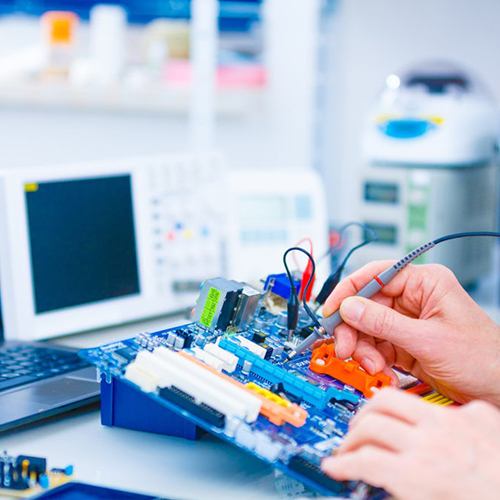

Industrial systems operate under increasingly severe conditions, where standard metals and engineering polymers quickly degrade. When internal temperatures exceed 1,000°C, or when aggressive chemical fluids carry abrasive particulates, traditional alloys succumb to oxidation, thermal creep, and rapid wear. To extend mean time between failures (MTBF) and reduce costly downtime, engineers are replacing legacy materials with advanced technical ceramics.
Unlike traditional clay-based ceramics, advanced technical ceramics are highly engineered compounds—primarily oxides, carbides, and nitrides—synthesized under exact conditions. By analyzing the thermal, tribological, and mechanical data of these materials, we can understand exactly how they mitigate failure in high-stress industrial applications.
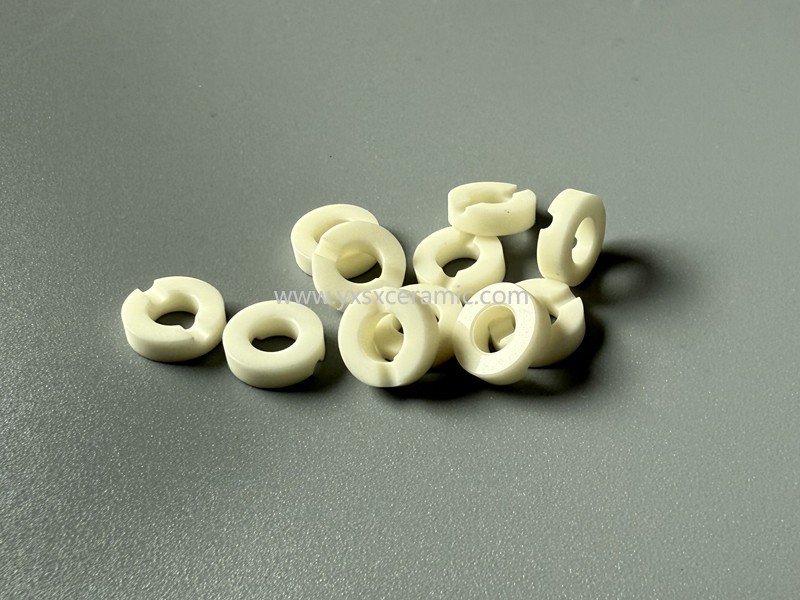
Many industrial applications require a material that acts simultaneously as a thermal conductor and an electrical insulator. In high-voltage equipment, sensors, and heating elements, metals are disqualified due to their electrical conductivity, while standard plastics melt or degrade under high thermal loads.
High-purity aluminum oxide (Al2O3) is the standard engineering response to this problem. When specified as an Alumina Ceramic Insulator, this material provides a massive dielectric strength, effectively preventing electrical arcing even at elevated voltages and temperatures. The atomic structure of alumina features strong ionic and covalent bonds. These bonds restrict the movement of electrons, resulting in exceptional electrical resistance, while the rigid lattice structure allows phonons (lattice vibrations) to transfer heat efficiently.
To quantify this, we can observe the material property differences between standard electrical porcelain, 95% alumina, and 99% high-purity alumina.
| Material Property | Electrical Porcelain | 95% Alumina (Al2O3) | 99% Alumina (Al2O3) |
| Density (g/cm³) | 2.30 - 2.40 | 3.60 - 3.72 | 3.85 - 3.90 |
| Max Operating Temp (°C) | 1,000 | 1,500 | 1,700 |
| Thermal Conductivity (W/m·K) | 1.5 - 2.0 | 18.0 - 24.0 | 30.0 - 35.0 |
| Dielectric Strength (kV/mm) | 10 - 15 | 15 - 18 | 17 - 20 |
| Volume Resistivity at 20°C (Ω·cm) | > 10^12 | > 10^14 | > 10^15 |
As the purity of the alumina increases from 95% to 99%, the thermal conductivity improves significantly, jumping from approximately 20 W/m·K to over 30 W/m·K. This data demonstrates why high-purity alumina is specified for substrates in power electronics and insulators in high-temperature furnaces. The material successfully pulls heat away from sensitive components without risking electrical short circuits.
Fluid handling presents a distinct set of engineering challenges. Pumps, mixers, and dispensing systems often deal with fluids containing hard particulates (like sand or metal shavings) or highly corrosive chemicals (like acids and alkalis). When brass or stainless steel components are used to control these fluids, they experience rapid abrasive wear and cavitation damage.
The surface of a metal component, under microscopic examination, contains peaks and valleys. When two metal surfaces rub together under pressure, these peaks cold-weld together and then break apart, causing adhesive wear. Furthermore, hard particles trapped between the surfaces plow into the metal, causing abrasive wear.
This wear mechanism is effectively neutralized by substituting metal with a Ceramic Valve Plate. Advanced ceramics possess a hardness that far exceeds that of common particulate contaminants. On the Mohs hardness scale, alumina and silicon carbide rank at 9, just below diamond at 10. Standard silica sand, the most common abrasive contaminant in fluid systems, ranks at 7. Because a material can only be scratched by a substance harder than itself, the ceramic surface remains entirely unaffected by particulate abrasion.
Furthermore, technical ceramics can be lapped and polished to an extreme degree of flatness. A high-quality ceramic valve plate is typically polished to a surface roughness (Ra) of less than 0.2 microns, with a flatness measured in light bands (typically within 0.0003 mm). When two such plates are pressed together, they create a hermetic seal. The molecules of the fluid itself act as a boundary lubricant, reducing the coefficient of friction to near zero.
Consider the wear rate comparison below, which tracks material loss over a standard 500,000-cycle fluid control test involving water contaminated with 2% silica abrasive:
| Material | Hardness (Vickers HV) | Coefficient of Friction (Water Lubricated) | Volume Loss (mm³ after 500k cycles) |
| Brass (Standard) | 110 - 150 | 0.35 | 45.20 |
| 316 Stainless Steel | 150 - 200 | 0.40 | 18.50 |
| 96% Alumina Ceramic | 1,500 - 1,650 | 0.05 | 0.02 |
| Silicon Carbide (SiC) | 2,200 - 2,800 | 0.02 | < 0.01 |
The data indicates a reduction in material volume loss by three orders of magnitude when switching from stainless steel to alumina. This extraordinary wear resistance ensures that fluid control mechanisms maintain their factory-specified sealing performance for millions of cycles without degradation, eliminating the need for rubber elastomers or frequent maintenance.
If technical ceramics have a known limitation, it is their inherent brittleness. While materials like alumina offer exceptional hardness and compressive strength, they have relatively low fracture toughness (K1c). In applications subjected to sudden impacts, severe mechanical shocks, or high bending moments, standard ceramics can experience catastrophic brittle failure.
To address environments where both extreme hardness and high impact resistance are required, material scientists utilize Zirconium Dioxide (ZrO2). Pure zirconia undergoes a disruptive volume expansion during cooling, which causes it to crack. However, by adding stabilizers like Yttrium Oxide (Y2O3) at roughly 3 mol%, engineers create Yttria-Stabilized Tetragonal Zirconia Polycrystal (Y-TZP).
Y-TZP exhibits a phenomenon known as "transformation toughening." When a micro-crack begins to propagate through a Zirconia Ceramic Part, the stress concentrated at the tip of the crack triggers a localized phase transformation. The crystal structure of the zirconia changes from a tetragonal phase to a monoclinic phase.
This phase change is accompanied by a volumetric expansion of about 3% to 4%. The expansion creates localized compressive stress around the tip of the advancing crack, effectively "pinching" the crack shut and halting its progression. This dynamic mechanism gives zirconia a fracture toughness and tensile strength that mimics steel, earning it the nickname "ceramic steel."
We can evaluate the mechanical limits of zirconia by comparing it directly to standard alumina:
| Mechanical Property | 99% Alumina (Al2O3) | Yttria-Stabilized Zirconia (Y-TZP) |
| Compressive Strength (MPa) | 2,500 | 2,000 |
| Flexural Strength (MPa) | 330 - 400 | 900 - 1,200 |
| Fracture Toughness (MPa·m^1/2) | 4.0 - 5.0 | 8.0 - 10.0 |
| Vickers Hardness (HV) | 1,600 | 1,250 |
| Max Operating Temp (°C) | 1,700 | 1,000 (strength drops above 500°C) |
The table highlights the specific trade-offs engineers must calculate. While a zirconia ceramic part offers nearly triple the flexural strength and double the fracture toughness of alumina, it sacrifices some high-temperature capability and absolute hardness.
Zirconia is heavily specified for components that undergo severe mechanical stress rather than pure thermal stress. Examples include deep-well pump plungers, wire drawing dies, metal forming tools, and specialized bearings. In these applications, the material absorbs impact and shear forces that would easily shatter standard oxide ceramics, while still providing a wear life far exceeding that of hardened tool steels.
Selecting the correct advanced material requires a precise audit of the operational environment. If the primary failure mode is electrical tracking at high temperatures, high-purity alumina is the mathematically sound choice. If the system is failing due to abrasive fluid friction, heavily polished oxide or carbide components will stabilize the wear rate. When heavy mechanical impacts threaten to shatter rigid components, phase-transforming zirconia provides the necessary durability. Aligning these measured material properties with specific environmental stressors allows engineering teams to engineer permanent solutions rather than temporary fixes.

24/7 Call Service +8618018373518
Email : yxshenxing88@vip.163.com
Address : No. 2022, Baoyang Road, Chuanbu Industrial Zone, Yixing City, Wuxi City, Jiangsu Province


 2025-10-14
 2025-10-14
blog Xml Privacy Policy Sitemap
Copyright @ 2026 Yixing Shenxing Technology Co., Ltd. All Rights Reserved.
 Network Supported
leave a message
Scan to wechat :

Scan to whatsapp :