

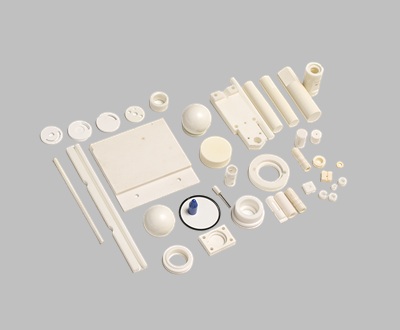
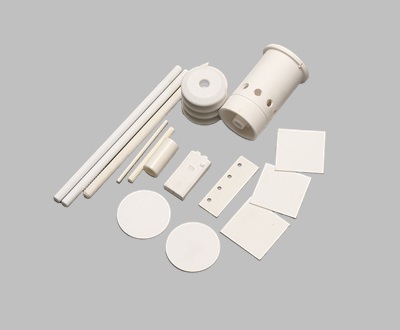
For engineers in the aerospace, electronics, and automotive industries, dimensional accuracy is non-negotiable. When manufacturing high precision special ceramics, the biggest challenge often lies in the very first step: forming.
Uneven pressure distribution during the forming stage leads to inconsistent density, which ultimately causes warping, cracking, or severe shrinkage during the sintering process. So, how do top-tier manufacturers solve this?
Drawing on over a decade of export experience and dozens of automated production lines, Yixing Shenxing shares the engineering secrets to achieving micron-level precision in dry powder compacting.
Precision starts before the press even moves. Raw ceramic powder is incredibly fine and prone to clumping, which causes uneven filling in the mold cavity.
To achieve high precision, the raw powder must undergo spray drying to form spherical granules. This ensures excellent flowability. When the powder flows like water into the die cavity, it fills every corner uniformly. Whether you are pressing alumina ceramics for insulators or zirconia for wear-resistant parts, consistent powder filling is the foundation of a uniform green body (unfired ceramic).
Manual or outdated hydraulic presses cannot maintain the consistent force required for mass production. High precision demands advanced mechanical control.
At Yixing Shenxing, we utilize large-tonnage mechanical dry powder compacting production lines. These automated machines provide precise, multi-axis pressing (pressing from both the top and bottom simultaneously). This dual-action pressing minimizes the "density gradient" (where the top of the part is denser than the bottom), ensuring that the ceramic component shrinks uniformly during the firing process.
The ceramic powder is highly abrasive. During mass production, the friction between the powder and the mold will wear down the tooling, slowly altering the dimensions of the final product.
To maintain strict tolerances over millions of cycles, reliable manufacturers invest heavily in ultra-hard tungsten carbide molds. Furthermore, incorporating precise draft angles and polished surfaces allows for smooth ejection without causing micro-cracks in the fragile green body.
While dry pressing is highly efficient for flat or cylindrical parts, what happens when a component has extreme height-to-width ratios or complex internal channels?
In these cases, unidirectional dry pressing might still leave density weak spots. To solve this, professional manufacturers supplement their lines with isostatic pressing machines. By applying equal fluid pressure from all directions simultaneously, isostatic pressing guarantees 100% uniform density, completely eliminating the risk of internal stresses and dimensional warping for complex shapes.
Struggling with inconsistent ceramic dimensions or high defect rates? Send your technical drawings to the Yixing Shenxing engineering team today for a free manufacturing feasibility analysis!

24/7 Call Service +8618018373518
Email : yxshenxing88@vip.163.com
Address : No. 2022, Baoyang Road, Chuanbu Industrial Zone, Yixing City, Wuxi City, Jiangsu Province


 2025-10-14
 2025-10-14
blog Xml Privacy Policy Sitemap
Copyright @ 2026 Yixing Shenxing Technology Co., Ltd. All Rights Reserved.
 Network Supported
leave a message
Scan to wechat :

Scan to whatsapp :