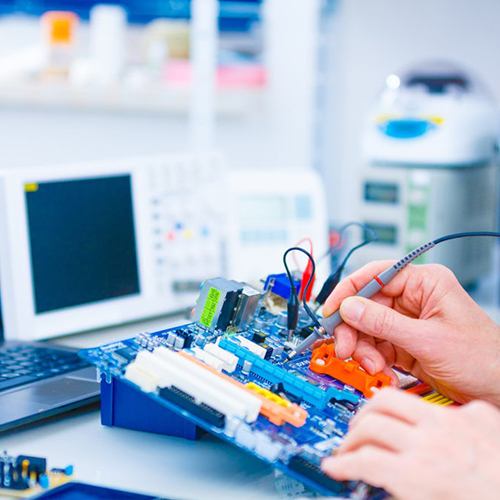

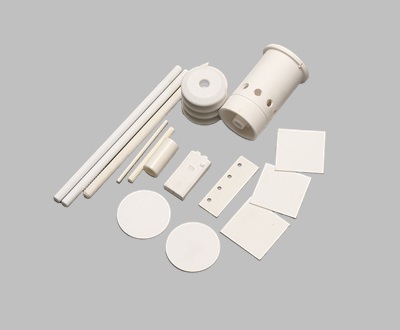
Alumina ceramic part solutions, such as those in Alumina Ceramic Part, drive transformation across industrial applications. You gain superior performance, reliability, and efficiency by choosing alumina ceramic. The unique properties of alumina ceramic set these parts apart from metals and polymers. Review the table below to see how alumina ceramic excels in mechanical strength, wear resistance, thermal stability, and chemical resistance:
|
Property |
Alumina Ceramics |
Comparison to Other Materials |
|---|---|---|
|
Mechanical Strength |
High mechanical strength |
Superior to many metals and organic materials |
|
Wear Resistance |
Comparable to superhard alloys |
266 times that of manganese steel |
|
Thermal Stability |
Excellent thermal stability |
Better than many polymers and metals |
|
Chemical Resistance |
High chemical corrosion resistance |
Incomparable to many organic materials |
|
Weight |
Light weight (3.7~3.95g/cm³) |
Half the density of steel, reducing equipment load |
|
Application Range |
Wide range across industries |
Used in machinery, aerospace, medical, etc. |
You ensure your equipment operates at peak performance by selecting the right alumina ceramic parts for demanding environments.
Alumina ceramic parts offer high mechanical strength, making them ideal for demanding industrial environments.
These ceramics excel in thermal stability, maintaining performance at temperatures where metals and polymers fail.
Alumina ceramics resist wear and corrosion, leading to longer service life and reduced maintenance costs.
Choosing alumina ceramic enhances safety and efficiency in critical applications, such as aerospace and chemical processing.
Investing in alumina ceramic parts can lead to significant cost savings through improved durability and reduced downtime.
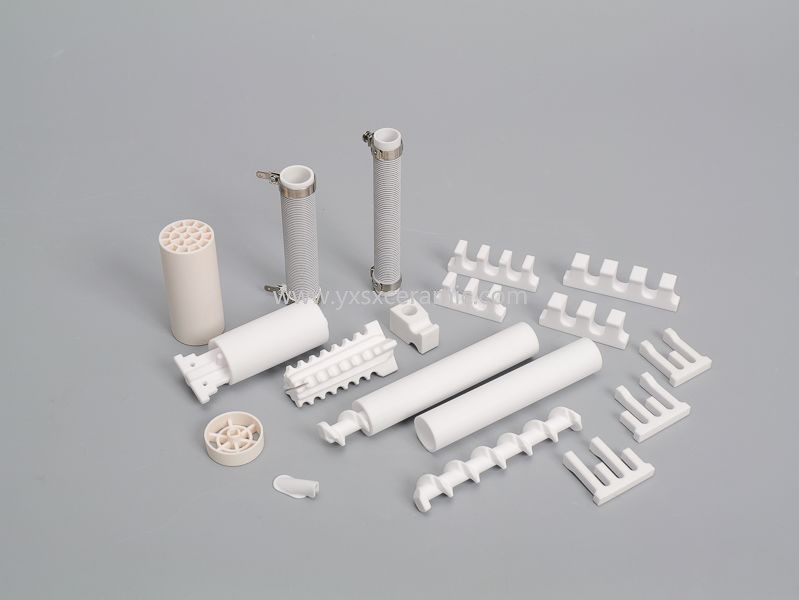
When you select components from Alumina Ceramic Part, you gain access to materials that thrive in extreme heat. Alumina ceramic stands out for its remarkable thermal stability, which ensures reliable performance in the most demanding industrial applications.
Alumina ceramic delivers consistent performance at temperatures that challenge most engineering materials. You can rely on its thermal properties to maintain structural integrity and mechanical strength even as temperatures soar. The table below highlights the maximum operating temperatures for alumina ceramic parts based on purity and environment:
|
Purity Level |
Maximum Operating Temperature (°C) |
Maximum Operating Temperature (°F) |
|---|---|---|
|
Standard Purity (95%) |
1450 |
2650 |
|
High Purity (99%+) |
1600 or higher |
2900 or higher |
|
Operation in Air |
1800 |
3272 |
|
Operation Under Vacuum |
1500 |
2732 |
You see that alumina ceramic maintains its properties at temperatures where metals and polymers begin to deform or degrade. This stability comes from its aluminum oxide composition, which provides excellent mechanical strength and thermal resistance. The 99.5% alumina grade offers superior performance at elevated temperatures, making it ideal for sensitive and high-tech applications.
Tip: Alumina ceramic parts maintain mechanical strength and insulation after thousands of thermal cycles, with less than 2% dimensional change after 200 hours at 1550°C.
You encounter alumina ceramic in a wide range of high-temperature industrial environments. Aerospace and machinery industries demand materials that can withstand continuous service at temperatures up to 1700°C. The following table shows typical temperature ranges in these sectors:
|
Condition |
Temperature (°C) |
Temperature (°F) |
|---|---|---|
|
Atmospheric |
1650 |
2900 |
|
Vacuum |
2000 |
3000 |
|
Melting Point |
2050 |
3722 |
Alumina ceramic parts serve as thermal shields and insulation in aerospace, protecting sensitive components from heat. In manufacturing, you find them in furnace components, kiln tubes, and lab furnace rod supports. These parts maintain their structure and function even as temperatures fluctuate rapidly. For example, alumina maintains integrity in laboratory furnaces cycling between room temperature and 1600°C. In chemical processing, high-purity alumina resists corrosion, ensuring longevity in pump components, valve parts, and reactor vessels.
You benefit from alumina ceramic’s use in:
Kiln tubes for furnace and kiln manufacturers
Heat transfer plates in heat management systems
Bushings and rollers in robotics and CNC machinery
Electronic substrates for sensors and power modules
Cutting tools for high-speed machining operations
Alumina ceramic parts deliver longer tool life and higher process uptime compared to alloy steel, with alumina guide plates achieving four times longer tool life and 10% higher uptime.
You gain a significant advantage by choosing alumina ceramic over metals and polymers in high-temperature settings. The table below compares the thermal conductivity and expansion coefficients of these materials:
|
Material Type |
Thermal Conductivity |
Coefficient of Thermal Expansion |
|---|---|---|
|
Alumina Ceramics |
Moderate |
Moderate |
|
Metals |
Higher |
Higher |
|
Unfilled Polymers |
Lower |
Higher |
Alumina ceramic’s moderate thermal conductivity and expansion help prevent thermal shock and cracking. Metals, while often having higher thermal conductivity, expand more and can lose strength at high temperatures. Polymers degrade quickly and cannot match the thermal or mechanical properties of alumina.
You also improve safety and efficiency in your processes. Alumina ceramic crucibles resist rapid temperature changes without cracking. Their chemical resistance ensures they do not degrade in harsh environments, maintaining both integrity and safety. High mechanical strength means you can trust these parts for reliable performance in critical applications.
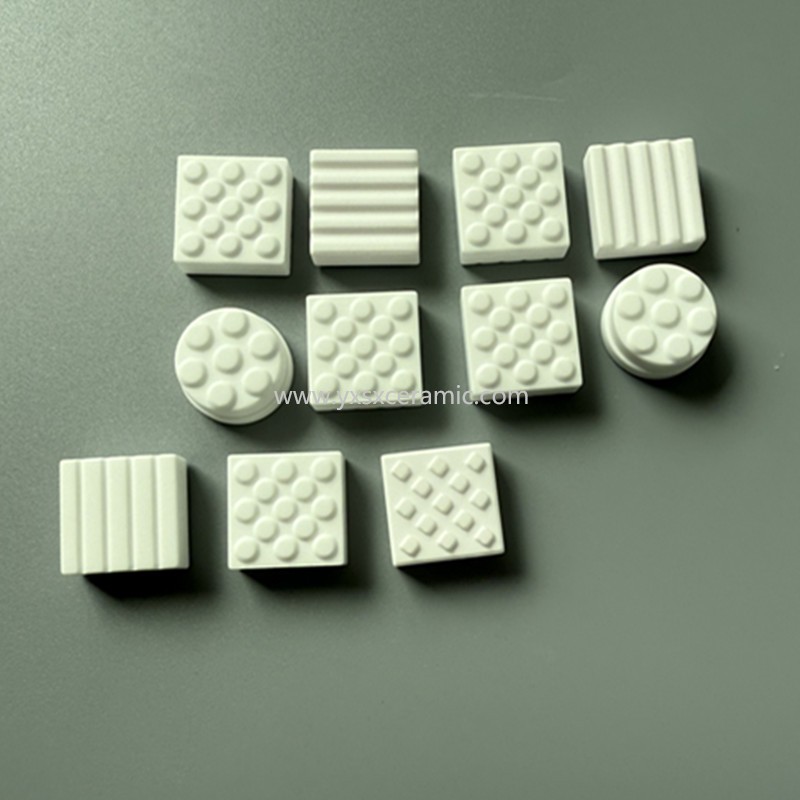
You rely on alumina ceramic for its outstanding mechanical strength and durability in machinery. The material’s properties make it ideal for demanding environments where thermal and mechanical stress are constant. You see impressive values for hardness and flexural strength in alumina ceramic parts:
|
Property |
Value |
|---|---|
|
Hardness |
19.34 GPa |
|
Flexural Strength |
356.83 MPa |
These numbers show that alumina ceramic components withstand heavy loads and resist deformation. You benefit from consistent performance, even when machinery operates under high thermal and mechanical pressure.
Alumina ceramic seals, bearings, and valve parts deliver good wear resistance and long service life. You find these components in machinery, electronics, medical equipment, and chemical industries. They protect equipment from vibration and reduce noise. You also see them in aerospace and laser technology, where thermal and mechanical demands are high.
Ceramic bearings resist corrosion and require less maintenance.
They do not wear out easily, even in harsh conditions.
Alumina ceramic seals provide tight, reliable seals that minimize leaks.
Valve parts made from alumina ceramic last longer and reduce replacement costs.
You improve equipment performance and simplify maintenance by using these parts. The 95% Alumina Ceramic Holder stands out for its excellent wear resistance and moderate insulation properties. You use it for bushings, fixtures, and general machine parts, especially where mechanical wear is a concern.
Alumina ceramic outperforms traditional materials in strength, wear resistance, and thermal stability. You see fewer failures and longer lifespans compared to metals and polymers.
|
Material Type |
Durability Features |
Lifespan Comparison |
|---|---|---|
|
Alumina Ceramics |
High wear resistance, corrosion resistance, stable over time, does not oxidize |
Superior longevity in demanding applications |
|
Traditional Materials |
Prone to wear from friction, rust, requires lubrication, can deform under stress |
Generally shorter lifespan due to wear |
You gain cost savings by reducing downtime and maintenance. Alumina ceramic parts resist corrosion from acids, alkalis, and solvents. They do not bend or deform easily under stress. You achieve reliable performance and extend the life of your equipment with these advanced ceramic solutions.
You depend on alumina ceramic for its outstanding electrical insulation properties in demanding industrial environments. With an alumina content above 95%, these ceramics deliver high dielectric strength and electrical resistivity, making them essential for high-voltage and high-frequency applications. The 95% Alumina Ceramic Holder demonstrates how you can achieve reliable insulation in machinery and electronic assemblies.
|
Property |
Alumina Ceramics |
Other Materials |
|---|---|---|
|
Electrical Resistivity |
High |
Varies |
|
Dielectric Strength |
Up to 15 kV/mm |
Around 10 kV/mm |
|
Breakdown Voltage |
High |
Varies |
|
Loss Tangent |
Low |
Higher |
|
Frequency Stability |
Stable |
Varies |
You find alumina ceramic in electronic components, high-temperature insulators, and semiconductor processing equipment. Its stable performance across a wide frequency range ensures safety and efficiency in your operations. The high hardness and mechanical strength of alumina ceramic also support its use in fine ceramics and industrial machinery parts.
99.5% alumina offers dielectric strength near 15 kV/mm.
95% alumina provides about 10 kV/mm, suitable for most industrial insulation needs.
You benefit from alumina ceramic’s ability to withstand corrosive chemical applications. The material resists melting and reactivity, even in extreme operating conditions. Engineers and scientists trust alumina for use in nuclear reactors and other harsh environments because of its low open porosity and controlled microstructure.
|
Type of Chemical |
Resistance Details |
|---|---|
|
Acids |
Highly resistant to strong mineral acids such as sulfuric acid, hydrochloric acid, and nitric acid. |
|
Alkalis |
Resistant to strong alkalis like sodium hydroxide and potassium hydroxide. |
|
High-Temperature |
Maintains structural integrity and resists chemical attack at elevated temperatures. |
You see α-alumina used in pump parts, valve seats, and other components exposed to aggressive media. The material maintains stability and performance over time, limiting reactions with harsh substances and ensuring long-term reliability.
You rely on alumina ceramic in pumps, pipes, and reaction vessels for chemical and semiconductor manufacturing. These ceramics serve as plungers, pistons, and nozzles in fluid handling systems. In the chemical industry, you use alumina for catalyst carriers and filtration components, where purity and corrosion resistance are critical.
In semiconductor manufacturing, alumina ceramic offers a cost-effective solution with a well-balanced combination of properties. You benefit from low outgassing, high purity, and excellent electrical insulation. The material’s thermal conductivity supports heat dissipation, while its mechanical strength and dimensional stability ensure consistent performance through temperature cycling.
Tip: Alumina ceramic parts deliver both high hardness and thermal stability, making them ideal for advanced chemical and electronic applications.
You enhance your equipment’s durability and efficiency by choosing alumina ceramic for corrosive and high-temperature environments.
You see alumina ceramic parts driving innovation in aerospace and laser technology. These components deliver high performance in environments where reliability and precision matter most. In aerospace, you use alumina ceramic for navigation and communication systems, including altimeters and GPS modules. Ceramic substrates support antennas and RF communications, ensuring stable signals even under extreme conditions. You also find sensor components made from alumina ceramic in aircraft and spacecraft, where they detect critical parameters during flight.
Alumina ceramic provides filtration and chemical reaction storage in the chemical industry.
You rely on ceramic for medical-dental applications, such as stents and dental implants, due to its biocompatibility and durability.
Electronics benefit from alumina ceramic in integrated circuits and capacitors, thanks to excellent thermal conductivity.
You can review the Alumina Ceramic Part range to see how these solutions meet the demands of advanced industries.
|
Property |
Value Range |
|---|---|
|
Modulus of Elasticity |
300 - 400 GPa |
|
Tensile Strength |
200 - 350 MPa |
|
Compressive Strength |
2000 - 4000 MPa |
|
Hardness |
1500 - 2000 Vickers |
|
Fracture Toughness |
3 - 5 MPa·m½ |
|
Thermal Conductivity |
20 - 30 W/m·K |
|
CTE |
7 - 8 × 10⁻⁶/°C |
|
Maximum Operating Temp |
Up to 1700°C |
|
Specific Heat Capacity |
775 - 785 J/kgK |
|
Dielectric Strength |
10 - 35 kV/mm |
|
Dielectric Constant |
9 - 10 at 1 MHz |
These metrics show why you choose alumina ceramic for high-stress, high-temperature, and high-precision aerospace and laser applications.
You depend on alumina ceramic for semiconductor manufacturing because it offers purity, stability, and resistance to harsh chemicals. The material’s electrical insulation and thermal management properties make it ideal for wafer processing, etching, and deposition equipment. You use alumina ceramic in pumps, pipes, and reaction vessels, where it maintains performance despite aggressive chemicals and rapid temperature changes. The 95% Alumina Ceramic Holder demonstrates how you can achieve both mechanical strength and electrical insulation in demanding semiconductor environments.
You face challenges with wear and corrosion in advanced industrial settings. The Ceramic Pulley Plate addresses these issues with exceptional hardness and durability. This ceramic solution withstands heavy-duty operations and exposure to harsh chemicals, which extends equipment lifespan and reduces maintenance costs.
The Ceramic Pulley Plate achieves a Rockwell hardness of HRA80 to 90, approaching diamond levels.
You benefit from wear resistance far superior to rubber or plastic, resulting in fewer replacements.
The ceramic mosaic tiles in the pulley plate minimize downtime and lower long-term costs.
Note: You can rely on alumina ceramic parts for advanced applications that demand high wear resistance, chemical stability, and consistent performance.
You gain versatility with alumina ceramic parts across aerospace, electronics, chemical processing, and manufacturing. These solutions deliver measurable improvements in reliability, efficiency, and longevity.
You gain measurable advantages by choosing alumina ceramic parts for industrial applications. These components deliver enhanced durability, cost efficiency, and improved performance metrics, as shown below:
|
Benefit |
Description |
|---|---|
|
Enhanced Durability |
Superior wear and abrasion resistance leads to extended component life in high-wear applications. |
|
Cost Efficiency |
Initial investment is offset by reduced maintenance and downtime, improving long-term economics. |
|
Performance Metrics |
Demonstrated through extended service intervals and improved process efficiency. |
You also benefit from superior heat resistance, longer service life, and energy savings. Alumina ceramics resist corrosion and enhance safety in critical environments. For advanced industrial needs, you can rely on solutions like the Ceramic Pulley Plate.
You gain high mechanical strength, wear resistance, and thermal stability with alumina ceramic parts. Explore the Alumina Ceramic Part range to find solutions that improve reliability and efficiency in demanding environments.
You achieve excellent electrical insulation using alumina ceramics. The 95% Alumina Ceramic Holder provides high dielectric strength, supporting safe and stable operation in electronic and machinery systems.
You benefit from strong chemical resistance with alumina ceramic. These parts withstand acids, alkalis, and solvents, making them suitable for pumps, pipes, and reaction vessels in chemical processing.
You use the Ceramic Pulley Plate for wear and corrosion resistance in conveyor systems. This solution extends equipment life and reduces maintenance in heavy-duty operations.
You save costs over time with alumina ceramic parts. Their durability and resistance to wear minimize downtime and replacement needs, improving your equipment’s overall performance.

24/7 Call Service +8618018373518
Email : yxshenxing88@vip.163.com
Address : No. 2022, Baoyang Road, Chuanbu Industrial Zone, Yixing City, Wuxi City, Jiangsu Province


 2025-10-14
 2025-10-14
blog Xml Privacy Policy Sitemap
Copyright @ 2026 Yixing Shenxing Technology Co., Ltd. All Rights Reserved.
 Network Supported
leave a message
Scan to wechat :

Scan to whatsapp :