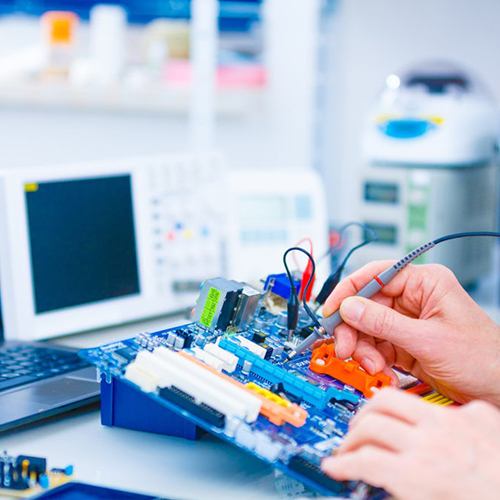

Choosing a ceramic component for industrial equipment is rarely as simple as selecting the highest-purity or hardest material available. A sealing ring, nozzle, pin, insulator, or valve component may operate under completely different combinations of temperature, pressure, chemical exposure, electrical load, friction, and dimensional requirements.
This is why material selection should start with the operating environment rather than the product name. Alumina, zirconia, steatite, and other technical ceramics each solve different engineering problems. Selecting the wrong grade can result in premature wear, cracking, dimensional instability, leakage, or unnecessary material costs.
For industrial buyers, the practical question is not simply “Which ceramic is better?” It is “Which ceramic provides enough performance for this specific component without paying for properties the application does not need?”

Before choosing a ceramic grade, engineers should define the actual working conditions. Four variables normally have the greatest influence on material selection: temperature, mechanical load, chemical exposure, and electrical requirements.
| Operating Condition | Main Risk | Important Ceramic Property |
|---|---|---|
| High temperature | Softening, deformation or thermal damage | Maximum working temperature and thermal stability |
| High mechanical load | Cracking or fracture | Flexural strength and fracture toughness |
| Abrasive media | Surface wear and dimensional loss | Hardness and wear resistance |
| Chemical exposure | Corrosion or material degradation | Chemical resistance |
| Electrical insulation | Current leakage or dielectric failure | Dielectric strength and electrical resistivity |
| Precision movement | Friction, wear and dimensional variation | Hardness, surface finish and dimensional tolerance |
Alumina is one of the most widely used technical ceramics because it provides a useful combination of hardness, electrical insulation, chemical stability, temperature resistance, and cost efficiency. However, 95% alumina and 99% alumina should not automatically be treated as interchangeable materials.
As alumina purity increases, the ceramic generally provides higher density and improved performance in demanding electrical, thermal, and mechanical environments. The trade-off is that higher-purity material can increase raw material and processing costs.
| Property | 95% Alumina | 99% Alumina | Engineering Consideration |
|---|---|---|---|
| Typical density | Approx. 3.6 g/cm³ | Approx. 3.8 g/cm³ | Higher density can support demanding wear and electrical applications |
| Thermal conductivity | Approx. 14–24 W/m·K | Approx. 19–30 W/m·K | Important when heat transfer is part of the design |
| Flexural strength | Approx. 240 MPa | Approx. 300 MPa | Higher strength provides more mechanical margin |
| Typical use | Insulators, holders, tubes and general industrial parts | High-performance electrical, mechanical and chemical components | Select according to actual operating requirements |
For example, a standard electrical holder may not require 99% alumina. Using a lower-cost 95% grade can provide adequate performance while keeping the component economical. In contrast, a component exposed to higher temperature, tighter electrical requirements, or more demanding wear conditions may justify the additional cost of 99% alumina.
Zirconia occupies a different position in the technical ceramic family. Its main advantage is not simply hardness. Zirconia can provide a combination of high strength, fracture toughness, wear resistance, and dimensional stability that makes it useful for mechanically demanding components.
This becomes important when a ceramic component experiences repeated mechanical loading rather than only static heat or electrical stress. Pins, shafts, guides, valve components, and precision wear parts can benefit from zirconia when fracture resistance and mechanical durability are important.
A CNC Machined Ceramic Pin, for example, should be evaluated based on more than material hardness. The diameter tolerance, straightness, surface finish, mating component, load direction, and expected cycle count can all affect service life.
| Component Requirement | Why It Matters | Typical Specification Focus |
|---|---|---|
| Pin diameter | Controls fit and load distribution | Dimensional tolerance |
| Surface finish | Influences friction and mating wear | Ra value |
| Mechanical loading | Determines fracture risk | Flexural strength and toughness |
| Operating environment | Determines long-term degradation | Temperature and chemical compatibility |
A common procurement mistake is selecting ceramic material first and then trying to make the component design fit it. A better approach is to define the component's function first.
| Component Type | Primary Requirement | Suitable Material Direction |
|---|---|---|
| Electrical insulator | Insulation and thermal stability | Alumina or steatite |
| Pump sealing component | Wear resistance, chemical stability and dimensional accuracy | High-purity alumina or other application-specific ceramics |
| Precision pin | Wear resistance and mechanical strength | Zirconia or alumina depending on loading |
| High-temperature nozzle | Heat resistance and dimensional stability | Alumina or other high-temperature ceramic |
| Wear plate | Abrasion resistance | Alumina or zirconia depending on impact conditions |
For pump and valve applications where sealing stability is critical, a 99% Alumina Ceramic Sealing Ring can be considered when high-purity alumina is appropriate for the operating environment. Material selection should still be checked against pressure, temperature, chemical exposure, mating materials, surface finish, and dimensional tolerances.
Even a technically appropriate ceramic can fail if the geometry is poorly designed. Ceramic materials are hard and wear-resistant, but they are not normally selected for ductility. Sharp corners, sudden changes in cross-section, excessive unsupported spans, and concentrated loads can create stress concentrations.
For this reason, ceramic component design should consider load distribution from the beginning. A small increase in radius at a transition, better support around a mounting area, or a more uniform wall thickness can sometimes provide more practical value than moving from one ceramic grade to another.
The same principle applies to nozzles. A 95% Alumina Ceramic Nozzle may be suitable for many heating and industrial applications, but the correct design still depends on the internal diameter, wall thickness, outlet geometry, thermal cycling, gas or fluid velocity, and mounting method.
A ceramic's maximum working temperature is important, but it should not be the only thermal parameter used during procurement. Thermal conductivity, thermal expansion, thermal shock resistance, heating rate, cooling rate, and temperature gradients can all influence component reliability.
Consider two components operating at the same nominal temperature. Component A remains at a stable 1,000°C for hours. Component B repeatedly moves from room temperature to 1,000°C during every production cycle. The second application places much greater emphasis on thermal shock resistance.
| Thermal Condition | Key Parameter | Procurement Question |
|---|---|---|
| Continuous high temperature | Maximum working temperature | What is the actual continuous operating temperature? |
| Rapid heating | Thermal shock resistance | How quickly does the component reach operating temperature? |
| Rapid cooling | Thermal expansion and toughness | What is the cooling cycle and temperature difference? |
| Localized heating | Thermal gradient | Will one section be substantially hotter than another? |
Material selection alone does not guarantee a precision ceramic component will work correctly. For sealing rings, shafts, pins, valve plates, and other mating components, dimensional tolerance and surface finish can directly affect assembly and operating performance.
For example, a sealing surface that is too rough may increase wear or prevent stable contact. A pin that is slightly oversized can create excessive interference, while a pin that is undersized can introduce unwanted movement and vibration.
The drawing supplied to the ceramic manufacturer should therefore identify critical dimensions rather than simply specifying “high precision.” A useful engineering drawing should define dimensional tolerances, surface roughness, flatness where applicable, concentricity, hole position, chamfers, radii, and inspection requirements.
A lower-cost ceramic component is not necessarily the lower-cost solution. If a component requires frequent replacement, causes machine downtime, or needs additional machining after delivery, its actual cost can be much higher than the purchase price suggests.
| Cost Factor | What to Evaluate |
|---|---|
| Purchase price | Material, geometry, machining and order quantity |
| Service life | Expected cycles or operating hours |
| Replacement labor | Time required for inspection and replacement |
| Downtime | Production loss during component failure |
| Quality control | Inspection, dimensional verification and rejection rate |
| Repeatability | Consistency between production batches |
For high-volume industrial procurement, repeatability is especially important. A component that performs well in a prototype but varies significantly between production batches can create much larger costs later. This is why material certificates, dimensional inspection, sample approval, and process control should be considered part of the sourcing decision.
A simple selection process can prevent many material and specification errors. Instead of starting with a ceramic grade, work through the application in the following order:
| Step | Question | Output |
|---|---|---|
| 1 | What does the component do? | Component function |
| 2 | What temperature will it experience? | Thermal requirement |
| 3 | What mechanical load will it carry? | Strength and toughness requirement |
| 4 | Will it contact chemicals, fluids or abrasive particles? | Chemical and wear requirements |
| 5 | What tolerance and surface finish are required? | Machining and inspection requirements |
| 6 | What production quantity is required? | Cost and manufacturing strategy |
Standard ceramic components can work well when the application matches an existing size and material specification. Custom manufacturing becomes more useful when the component must fit a specific machine, replace a non-standard part, meet a tight dimensional tolerance, or combine several performance requirements.
A custom ceramic project should normally begin with an engineering drawing or sample. The supplier can then evaluate material selection, forming method, sintering behavior, machining requirements, dimensional tolerances, surface finish, and inspection criteria.
For OEM projects, it is also useful to define the expected annual quantity at the beginning. Ceramic manufacturing economics can change significantly between prototype quantities and repeat production. Tooling, machining, inspection, packaging, and process optimization should all be considered when calculating the final unit cost.
No. 99% alumina generally provides higher performance in several demanding applications, but the additional purity may not provide meaningful value for every component. If the operating environment does not require the additional performance, 95% alumina can be a more economical choice.
Zirconia is worth considering when the component requires a strong combination of mechanical strength, fracture toughness, wear resistance, and dimensional stability. The final choice should still be based on the actual load, temperature, environment, geometry, and cost requirements.
Provide the component drawing or sample, ceramic material requirement if already specified, dimensions and tolerances, surface finish, operating temperature, mechanical load, chemical environment, application, annual quantity, and inspection requirements. More complete technical information allows the manufacturer to recommend a more appropriate production process and material.
Yes. Many technical ceramic components can undergo precision grinding and machining after sintering. However, machining requirements depend on the ceramic grade, geometry, tolerance, and surface finish. Tight-tolerance components should be discussed with the manufacturer before finalizing the design.
Both matter. A high-performance ceramic cannot compensate for an unsuitable geometry, excessive stress concentration, poor mating design, or incorrect tolerance. Material selection and component design should therefore be evaluated together.
For industrial ceramic sourcing, the most reliable approach is to define the working conditions first, identify the properties that actually matter, and then select the material and manufacturing process around those requirements. This avoids the common mistake of paying for unnecessary material performance while also reducing the risk of choosing a ceramic grade that cannot withstand the real operating environment.

24/7 Call Service +8618018373518
Email : yxshenxing88@vip.163.com
Address : No. 2022, Baoyang Road, Chuanbu Industrial Zone, Yixing City, Wuxi City, Jiangsu Province


 2025-10-14
 2025-10-14
blog Xml Privacy Policy Sitemap
Copyright @ 2026 Yixing Shenxing Technology Co., Ltd. All Rights Reserved.
 Network Supported
leave a message
Scan to wechat :

Scan to whatsapp :