Plastic vs. Ceramic Resistor Case: Which Offers Better Heat Dissipation?
Mar 26, 2026
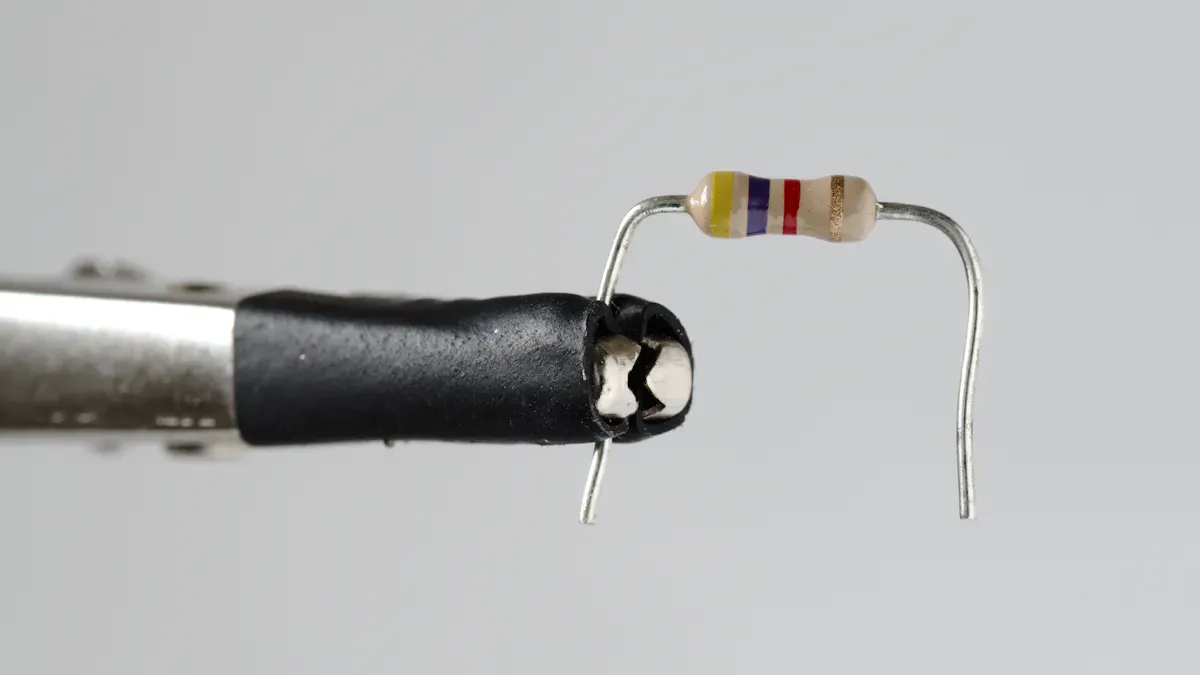
Ceramic resistor cases offer better heat dissipation than plastic. When you use resistors in electronic circuits, you need to manage heat well to keep performance stable and reliable. Good heat dissipation helps you reduce resistance drift and slow aging. You will also see fewer temperature rises and less risk of failure. With a Ceramic Resistor Case, you get improved thermal management, which directly enhances the lifespan and consistency of your resistors.
Effective heat dissipation maintains resistor stability and reliability.
Lower internal temperatures prevent resistance shifts.
Proper management extends resistor lifespan and performance.
Key Takeaways
Ceramic resistor cases provide superior heat dissipation, enhancing stability and reliability in electronic circuits.
Plastic cases are suitable for low-power applications but can lead to overheating and early failure in high-power environments.
Choosing a Ceramic Resistor Case can extend the lifespan of resistors and improve performance in demanding applications.
For safety and reliability, always opt for ceramic cases in circuits that generate significant heat.
Investing in ceramic resistors pays off in the long run due to their durability and reduced risk of failure.
Thermal Conductivity Comparison
Plastic Case Heat Management
You often see plastic resistor cases in low-power electronics. Plastic acts as an insulator, which means it does not transfer heat well. When you use a plastic case, heat builds up inside the resistor. This can cause the temperature to rise quickly. Over time, high temperatures may lead to resistance drift and early failure. The weak molecular structure of plastic, made up of long polymer chains, does not allow heat to move efficiently. You may notice that plastic cases can warp or degrade when exposed to continuous heat. This limits their use in high-power or high-temperature environments.
Tip: If you need a resistor for a simple, low-power circuit, a plastic case might work. For anything that generates more heat, you should look for better options.
Ceramic Resistor Case Heat Management
A Ceramic Resistor Case gives you much better heat management. Ceramics have a strong network of covalent and ionic bonds. These bonds let heat move quickly through the material. When you use a Ceramic Resistor Case, you benefit from high thermal conductivity. The laminated structure of ceramics helps heat flow out of the resistor, lowering the risk of hot spots. Ceramics also match the thermal expansion of many semiconductor materials. This reduces stress and keeps the resistor stable, even during temperature changes.
Ceramic coatings, such as Al2O3, add another layer of protection. They help spread heat evenly and lower the chance of cracks or thermal breakdown. You will find that a Ceramic Resistor Case can handle much higher temperatures without losing strength or reliability. This makes it the best choice for high-power circuits, industrial equipment, and any application where heat is a concern.
Here is a quick comparison:
Feature
Plastic Case
Ceramic Resistor Case
Thermal Conductivity
Low
High
Heat Dissipation
Poor
Excellent
Resistance to Breakdown
Low
High
Application Range
Low-power
High-power, industrial
If you want a resistor that stays cool and lasts longer, you should choose a Ceramic Resistor Case. You can also explore high temperature ceramic resistor, ceramic power resistor for industrial use, and thick film ceramic resistor for even more demanding applications.
Impact on Performance & Reliability
Temperature Rise and Power Handling
You need to consider how much heat a resistor can handle before it fails. When you use a plastic case, the material traps heat inside. This causes the temperature to rise quickly, especially in high-power circuits. As the temperature climbs, the resistor cannot dissipate heat fast enough. You may notice that the resistance value starts to drift, which can affect the accuracy of your circuit.
A Ceramic Resistor Case, on the other hand, allows heat to escape efficiently. The strong bonds in ceramic materials move heat away from the resistor core. This means you can use a high power ceramic resistor for industrial applications without worrying about overheating. You get stable resistance values, even when the circuit runs at high power. If you need to handle large amounts of energy, a Ceramic Resistor Case gives you better performance and safety.
Note: For circuits that demand high power and low temperature rise, always choose a Ceramic Resistor Case. This choice helps you avoid unexpected failures and keeps your devices running smoothly.
Long-Term Reliability in High-Temperature Environments
You want your resistors to last as long as possible, especially in harsh environments. Plastic cases can break down over time when exposed to heat. The material may warp, crack, or even melt. This leads to early failure and costly repairs. You may also see changes in resistance that make your circuit unreliable.
Ceramic Resistor Case options resist thermal breakdown. The ceramic material stays strong, even at high temperatures. You can use a thick film ceramic resistor for high temperature circuits and trust that it will keep working year after year. Ceramics do not degrade like plastics. They also match the expansion of other electronic materials, which reduces stress and prevents cracks. This makes ceramic-cased resistors ideal for automotive, industrial, and power supply applications.
Feature
Plastic Case
Ceramic Resistor Case
Long-Term Reliability
Low
High
Resistance Drift
High
Low
Suitability for Harsh Environments
Poor
Excellent
If you need a resistor for a demanding environment, you should look for a Ceramic Resistor Case. You can find more details on our Ceramic Resistor Case page.
Overheating Risks with Plastic Cases
Overheating poses a serious risk when you use plastic resistor cases. As the temperature rises, the resistance value can change due to the temperature coefficient of resistance. This means your circuit may not work as expected. Inaccurate current measurements can lead to unsafe conditions, especially in sensitive electronics.
The physical structure of a plastic case may also suffer damage. You might see cracking or delamination, which can cause the resistor to fail completely. This not only affects the resistor but can also damage other components in your circuit. You should avoid plastic cases in any application where heat is a concern.
Tip: For safety and reliability, always consider a Resistor Ceramic case for circuits that generate significant heat.
You can explore options like ceramic resistor for power electronics and industrial ceramic resistor with high reliability for the best results in demanding applications.
Practical Considerations
Cost Differences
You often need to balance performance with budget. Plastic resistor cases usually cost less to produce. If you work on a project with tight cost limits, plastic may seem attractive. You can use plastic cases in low-power, consumer electronics where heat is not a major concern. However, when you need a Ceramic Resistor Case for high-power or industrial use, you pay more for the advanced material and manufacturing process. The higher price reflects the superior heat dissipation and reliability you get. If your application demands long life and stable performance, the extra investment in a high temperature ceramic resistor pays off.
Tip: Choose plastic for simple, low-power circuits. Select ceramic when safety, reliability, and heat management matter most.
Durability and Mechanical Strength
You want your resistors to last, but each material has strengths and weaknesses. Ceramic resistor cases offer excellent rigidity and stability because of their strong ionic and covalent bonds. This structure gives you high compressive and flexural strength. However, ceramics are brittle. They can fracture if you drop them or apply a sharp impact. Standardized tests, like ISO 10545-4, show that ceramics absorb less energy before breaking. Uniform thickness and structure help ceramics resist small impacts, but you should handle them with care. There is little information about how plastic resistor cases perform under mechanical stress, but plastics generally deform rather than crack. This means plastic may survive drops better, but it cannot match the heat resistance of ceramics.
Application Suitability
You need to match the resistor case to your application. Ceramics excel in high-power and high-temperature environments. You find ceramic power resistor for industrial use in places like particle physics labs, motor drive discharge systems, and engine braking for trains. The table below shows where you benefit most from a Ceramic Resistor Case:
Application Description
Reason for Use
Particle physics experiments
Manage massive energy loads with superior heat dissipation.
Electrostatic precipitators
Handle high voltage and power dissipation.
Encapsulated assemblies
Protect from hazards and enhance thermal performance.
Motor drive discharge systems
Ensure safe energy discharge for maintenance.
High load testing systems
Act as controllable artificial loads.
Engine braking in trains
Convert kinetic energy to heat safely.
Neutral grounding resistors
Manage fault currents in power systems.
For low-power, cost-sensitive projects, plastic cases work well. For demanding jobs, always choose a Ceramic Resistor Case or Resistor Ceramic for the best results. You can explore options like industrial ceramic resistor with high reliability and thick film ceramic resistor for specialized needs.
Summary: Which Case Is Better?
Ceramic Resistor Case Advantages
You gain several benefits when you choose a Ceramic Resistor Case for your electronic projects. Ceramic packaging stands out for its durability and ability to manage high temperatures. This feature makes it ideal for high-power applications. You see ceramic resistors used in sectors like aerospace and defense, where components must survive high-radiation or high-vibration environments. The long-term reliability and thermal performance of ceramic packages help prevent costly failures and downtime.
Ceramic resistors enhance reliability and performance in high-power devices because of their durability.
Excellent thermal stability allows efficient operation under extreme conditions.
AI-driven manufacturing processes improve quality control and reduce production costs, further boosting reliability.
AI design tools enable customized resistor solutions for specific operational demands.
The integration of AI and ceramic resistor technology supports smarter electronic systems and ensures optimal efficiency.
You can rely on a Ceramic Resistor Case for demanding environments. It offers superior heat dissipation and stability, making it the best choice for applications like high temperature ceramic resistor, ceramic power resistor for industrial use, and industrial ceramic resistor with high reliability.
When Plastic Cases Are Acceptable
Plastic resistor cases work well in low-power or cost-sensitive applications. You can use them to control electrostatic discharge (ESD) effectively without compromising safety. Resistance values in the hundreds of ohms limit discharge current at low voltages, such as 250 to 1000 volts. Using materials with resistance in this range reduces costs and environmental impact. Plastic cases are not suitable for extreme environments. They are prone to high temperatures and mechanical abuse. Plastic enclosures do not provide adequate electromagnetic shielding compared to metal or ceramic options.
Plastic cases offer a budget-friendly solution for simple circuits.
They help reduce manufacturing costs when safety and performance requirements are moderate.
You should avoid plastic cases in demanding applications where heat, durability, and reliability matter most.
For basic projects, plastic resistor cases are acceptable. For high-power, high-temperature, or mission-critical systems, always select a Ceramic Resistor Case or thick film ceramic resistor.
You now know that a Ceramic Resistor Case gives you the best heat dissipation and reliability. When you choose between Resistor Ceramic and plastic, focus on these key factors:
Application requirements: Match material properties to your circuit’s needs, including thermal and environmental resistance.
Budget constraints: Weigh initial price against long-term savings from fewer replacements.
Long-term reliability: Pick materials that lower failure risk and maintenance.
The electronics industry is moving toward high temperature ceramic resistor solutions, especially as electric vehicles and advanced devices demand better thermal management.
FAQ
What makes a Ceramic Resistor Case better for heat dissipation?
You get better heat dissipation from a Ceramic Resistor Case because ceramic materials transfer heat quickly. This keeps your resistor cool and stable. You can use a high temperature ceramic resistor for demanding applications.
Can I use plastic resistor cases for high-power circuits?
You should avoid plastic cases in high-power circuits. Plastic traps heat and increases failure risk. For safety, choose a ceramic power resistor for industrial use or a thick film ceramic resistor.
How does a Resistor Ceramic improve reliability?
A Resistor Ceramic resists thermal breakdown and maintains performance in harsh environments. You see less resistance drift and longer lifespan. This makes it ideal for automotive and industrial electronics.
Are ceramic resistor cases more expensive than plastic?
You pay more for a Ceramic Resistor Case because of advanced materials and manufacturing. The higher cost gives you better heat management and reliability. For critical systems, this investment saves money over time.
When should I choose a plastic resistor case?
You can use plastic resistor cases in low-power, cost-sensitive projects. They work well for basic circuits where heat is not a concern. For anything that needs durability or high temperature resistance, select a ceramic resistor for power electronics.







 2025-10-14
 Network Supported