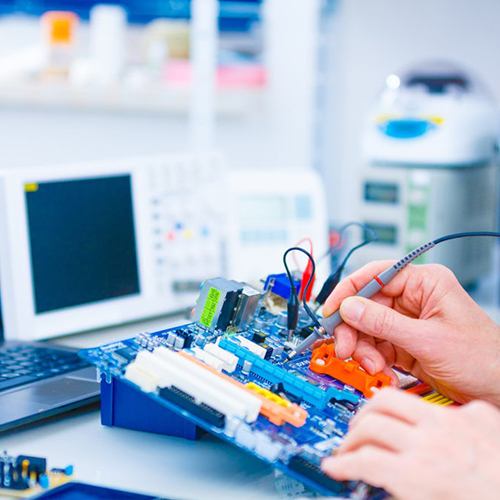

Choosing the right ceramic solid rods helps things work well and saves money. You need to think about how the material you pick changes the results.
Alumina costs less because it is easy to find and make.
Zirconia is stronger and lasts longer, so it costs more but is better for tough jobs.
Look at how well the rod handles heat, wear, and rust. Guides about materials help you choose the best one.
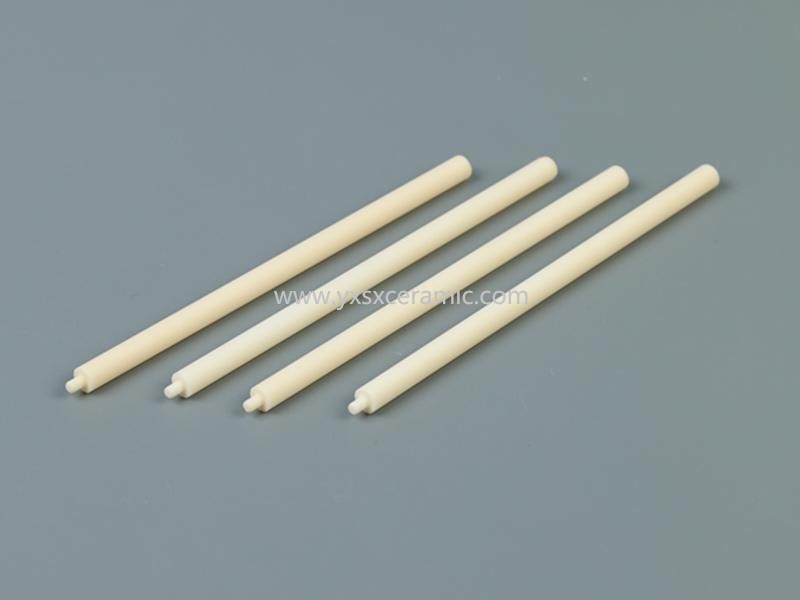
Pick ceramic solid rods that fit what your project needs. Think about things like how well they handle heat, how tough they are, and if they stop electricity.
Learn how alumina and zirconia ceramic rods are not the same. Alumina costs less and is good for stopping electricity. Zirconia is stronger and lasts longer.
Always look at the manufacturer's data sheets for details. This helps you pick rods that are safe and work well.
Before picking ceramic solid rods, know what your project needs. Many industries use ceramic rods for different jobs. Each job needs something special from the rods. The table below shows how different industries use ceramic solid rods and what they need:
|
Industry Sector |
Application |
Key Requirements |
|---|---|---|
|
Aerospace and Defense |
Engine Components |
High heat resistance, wear resistance |
|
|
Missile Components |
Ability to withstand extreme temperatures and stress |
|
Automotive Industry |
Braking Systems |
Excellent wear resistance, heat dissipation |
|
|
Sensors |
High-temperature stability |
|
Energy and Power Generation |
Nuclear Industry |
High radiation resistance, extreme temperature endurance |
|
|
Power Electronics |
High heat resistance, efficiency |
|
Industrial Equipment |
Wear-Resistant Parts |
Endurance to extreme abrasion and high pressure |
|
|
Cutting Tools |
Hardness, wear resistance |
|
Semiconductor Industry |
Wafers and Substrates |
Excellent thermal conductivity, high durability |
|
Oil and Gas |
Downhole Tools |
High strength, wear resistance, high-temperature performance |
Pick ceramic solid rods that fit your job’s needs. If you work with cars, you need rods that handle heat and wear. If you work with computer chips, you need rods that move heat well and last long. Always think about how you will use the rods before you choose.
Where you use ceramic solid rods changes how they work. You need to look at things like temperature, humidity, and moisture. Other things like air type, heat changes, radiation, and stress also matter.
Ambient temperature
Humidity
Moisture
Atmospheric composition
Thermal cycling
Radiation
Mechanical stresses
If your job gets very hot, check how much heat each ceramic rod can take. The chart below shows how hot different ceramic rods can get:
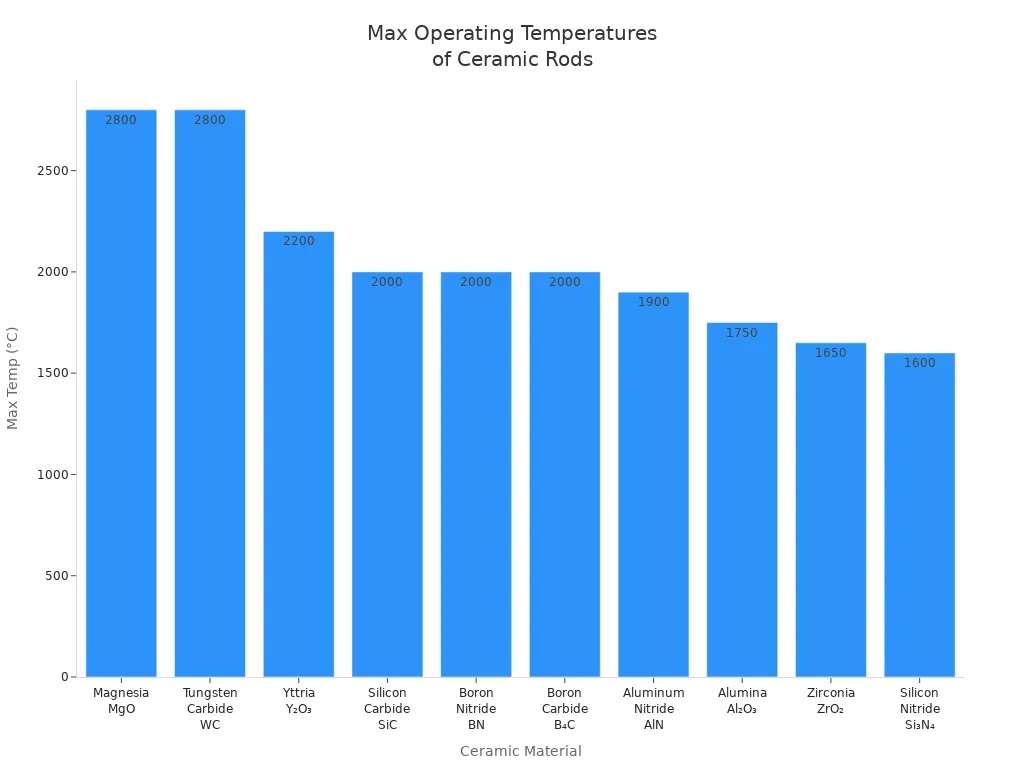
Magnesia rods can take up to 2800°C. Alumina ceramic solid rods work up to 1750°C. Zirconia ceramic rods work up to 1650°C. Pick a rod that matches your job’s heat range. If the temperature changes a lot, make sure the rods do not crack.
Tip: Always read the manufacturer's data sheets. They show the exact temperature and limits for the ceramic rods you want to use.
Think about how strong and how good at blocking electricity the rods need to be. If the rods hold heavy things or get hit a lot, they need to be hard and strong. The table below shows what to look for:
|
Property |
Value |
|---|---|
|
Hardness |
1200–1300 HV (Vickers) |
|
Flexural Strength |
900–1200 MPa |
|
Thermal Conductivity |
2–3 W/m·K |
|
Wear Resistance |
Excellent |
|
High-Temperature Resistance |
Up to 1000°C |
If you need the rods to block electricity, alumina, steatite, or porcelain rods work well. These rods do not let electricity pass and can handle high voltage. You can use them in transformers, furnaces, and places where plastic insulators would melt. Ceramic solid rods keep blocking electricity even when it gets hot or changes fast.
When you look at different ceramic rods, think about both strength and electrical needs. Zirconia ceramic rods are tough and do not crack easily. This helps if your job has lots of movement or hits. Alumina ceramic solid rods are good insulators and strong, but cost less.
Note: Always match the rod’s strength and electrical properties to your job’s needs. This helps the rods last longer and keeps things safe.
If you match ceramic solid rods to your job’s needs, where you use them, and how strong or insulating they must be, you get the best results and save money.
When you look at ceramic rods, you should see how each one works in real jobs. Alumina and zirconia are the most used types. Each type has its own special strengths. Knowing what each ceramic can do helps you pick the right one.
Alumina ceramic rods are strong and work well for many things. You can find them in oil and gas, electronics, food, welding, and airplanes. These rods are hard, bend without breaking, and block electricity very well.
Here is a table that shows the main properties of alumina ceramic rods:
|
Property |
Value |
|---|---|
|
Hardness |
1250–1600 HV (Vickers) |
|
Flexural Strength |
300–550 MPa |
Alumina ceramic rods can take heat up to 1750°C. They also move heat away fast. This makes them good for jobs that need both strength and heat control. You can use them where blocking electricity is important, like in electronics and high-voltage machines.
Tip: Alumina ceramic rods cost less than other advanced ceramics. You can use them for big projects and not spend too much.
Zirconia ceramic rods are very tough and do not wear out fast. You can use them for heavy loads, hard hits, or strong chemicals. Partial stabilized zirconia (PSZ) is very strong and has tiny grains. This makes it last longer than alumina.
PSZ ceramics are strong and tough.
These rods have tiny grains and last longer than alumina.
Zirconia lasts 5–10 times longer than alumina.
Zirconia resists rust better, so it works in harsh places.
Zirconia ceramic rods are also great at stopping cracks. Yttria-stabilized zirconia (Y-TZP) can reach 10–15 MPa√m. This means the rods do not crack easily and last longer. Zirconia-toughened alumina (ZTA) mixes both materials and has toughness around 7–10 MPa√m.
You can use zirconia ceramic rods where you need both strength and damage resistance. They are good for cutting tools, wear parts, and chemical jobs.
You need a simple plan to pick the right ceramic rods. A material selection guide helps you choose well. Here are the steps you should follow:
Define the Application
Decide where and how you will use the ceramic. Think about how hot it gets and how long you need it to last.
Prioritize Key Properties
List the most important things for your job. You might need strength, blocking electricity, or handling heat and chemicals.
Compare Material Options
See how different ceramic rods match your needs. Use tables and charts to help you decide.
Review Product Specifications and Standards
Make sure the ceramic meets safety rules. Look for trusted certifications.
Consider Cost and Availability
Balance what you want with your budget. Check if you can get the ceramic easily.
You can use online tools to help you search. Kennametal has a library with brochures, catalogs, and data sheets. These tools give you lots of details about ceramic rods and help you compare them.
Note: Always match the ceramic to your job’s needs. The right choice helps you get better results, longer use, and lower costs.
Here is a table to help you see the main differences between alumina and zirconia ceramic rods:
|
Property |
Alumina |
Zirconia |
|---|---|---|
|
Max Temperature (°C) |
1750 |
2400 |
|
Thermal Conductivity (W/mK) |
24–29 |
2–3 |
|
Wear Resistance |
Good |
Excellent |
|
Corrosion Resistance |
Good |
Excellent |
|
Fracture Toughness (MPa√m) |
3–5 |
10–15 |
|
Electrical Insulation |
Excellent |
Good |
You should pick alumina ceramic rods for jobs that need blocking electricity and moving heat. Zirconia ceramic rods are best when you need strength, toughness, and resistance to wear and chemicals.
By following a material selection guide and using trusted data, you can pick the best ceramic rods for your project. This helps you get the results you want and avoid mistakes that cost money.
You must pick ceramic rods that fit your project size. The right size and tolerance keep things safe and working well. The table below shows common sizes and tolerances for ceramic rods used in tough jobs:
|
Specification |
Value |
|---|---|
|
Diameter Tolerance |
h5 |
|
Length Tolerance |
±0.05 mm |
|
Surface Finish |
Ra 0.1 µm as standard |
|
Diameter Range |
Ø 0.8 mm – Ø 25 mm (solid) |
|
Standard Lengths |
50 mm, 100 mm, 150 mm, 300 mm (custom up to 600 mm) |
Check if your supplier can make rods that meet these standards. This is extra important if you need high-purity alumina or other special ceramics.
Surface finish changes how ceramic rods work in real life. You can ask for custom rods with special sizes, tighter tolerances, different shapes, or higher purity. The steps for custom rods are: send your needs, confirm your order, make a sample, start full production, and check quality. Making custom ceramic rods usually takes 3–7 weeks. The price depends on how pure and complex the rods are.
Tip: If you want high-purity alumina or special grades, talk to your supplier early. This helps you avoid waiting too long.
Always choose suppliers with good certifications. The table below shows important certifications for ceramic rods:
|
Certification |
Description |
|---|---|
|
IATF 16949:2016 |
Quality management standard for automotive industry |
|
ISO 9001:2015 |
International standard for quality management systems |
Certifications like ISO 9001 mean the supplier checks quality very carefully. This helps you get ceramic rods that stay pure and last a long time. Good suppliers always try to improve and do their best. This means you get top-quality ceramic rods for important jobs.
Not checking the purity level you need
Forgetting how surface finish affects ceramic rods
Picking suppliers without the right certifications
Not asking about wait times for custom high-purity alumina rods
Note: Always match the ceramic type, purity, and specs to your project. This helps your rods last longer and work better.
You can pick the best ceramic solid rod by matching what you need with the right material and size.
Experts can help you and give advice so you can choose between alumina ceramic solid rod or zirconia ceramic rod.
Material selection guides help you avoid mistakes by showing which properties fit your job.
For the best results, ask a supplier for help.
Yes. Zirconia ceramic rods work in heat up to 1650°C. If you need rods for even hotter places, use alumina ceramic solid rods.
Pick alumina ceramic solid rods if you need great electrical insulation.
Always look at the voltage and temperature limits before choosing.

24/7 Call Service +8618018373518
Email : yxshenxing88@vip.163.com
Address : No. 2022, Baoyang Road, Chuanbu Industrial Zone, Yixing City, Wuxi City, Jiangsu Province


 2025-10-14
 2025-10-14
blog Xml Privacy Policy Sitemap
Copyright @ 2026 Yixing Shenxing Technology Co., Ltd. All Rights Reserved.
 Network Supported
leave a message
Scan to wechat :

Scan to whatsapp :