
Introduction
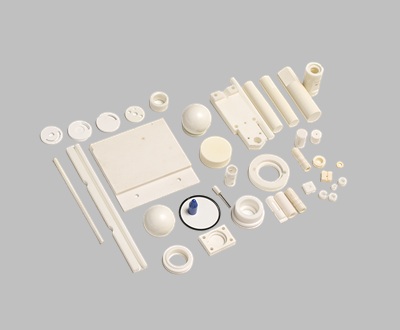
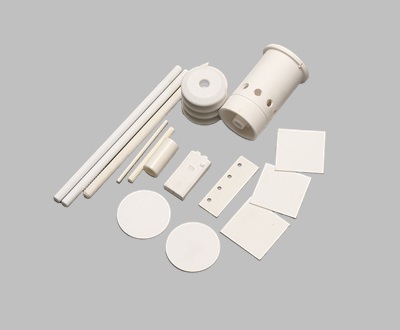
Alumina ceramic, also known as aluminum oxide ceramic (Al₂O₃), is the most widely‑used advanced technical ceramic across global industries. It is classified by alumina content grades: 75%, 92%, 95%, 99% and 99.5% high‑purity series. Higher Al₂O₃ purity brings better electrical insulation, thermal stability and chemical inertness, while medium‑purity grades deliver balanced cost‑performance for mass‑volume industrial parts. Thanks to its unique combination of mechanical, dielectric and anti‑corrosion properties, alumina components are irreplaceable for automotive sensors, electronic insulation, precision machinery, new‑energy equipment and harsh‑condition chemical processing systems.
Core Material Properties
High‑purity alumina ceramics exhibit a set of outstanding comprehensive performances:
1. Excellent electrical insulation: High volume resistivity and breakdown strength, maintaining reliable insulating performance even under continuous high‑temperature conditions above 1000 °C, preventing electric leakage and signal interference. This makes it ideal for sensor bases, insulators and electronic substrates.
2. High mechanical strength & hardness: Mohs hardness reaches grade 9. Dense 99% alumina provides flexural strength of 300‑450 MPa, great wear‑resistance against particle erosion and mechanical friction, far exceeding most engineering plastics and ordinary metals in abrasive working environments.
3. Superior chemical stability: Resistant to most acids, alkalis and corrosive exhaust gas. It hardly reacts with most chemical media except hydrofluoric acid and hot concentrated strong alkali, avoiding metal ion contamination for precision detection devices.
4. High‑temperature performance: Capable of long‑term service at 1000‑1200 °C. Optimized formulations achieve improved thermal‑shock resistance to withstand repeated rapid cold‑hot cycles, critical for exhaust sensors and high‑temperature furnace accessories.
One key limitation to note is inherent brittleness. Alumina has relatively low fracture toughness. Sharp corners, surface scratches or concentrated stress may trigger cracking, so structural design and precision machining are essential for component reliability.
Main Manufacturing Workflow
The typical production chain for custom alumina ceramic components includes 5 key stages:
1. Powder preparation: High‑purity alumina powder mixes with sintering aids, binders and solvent for granulation. Powder particle size directly decides final microstructure and mechanical performance.
2. Green body forming: Multiple forming technologies are selected according to part geometry: dry pressing for simple shaped parts, extrusion for tubes and rods, isostatic pressing for high‑density blanks, tape‑casting for thin substrates.
3. Binder burnout: Slow heating removes organic binders inside green bodies to avoid cracking during sintering.
4. High‑temperature sintering: Sintered at 1550‑1750 °C. Densification takes place with 12‑20% linear shrinkage. Sintering temperature and holding time are strictly controlled to prevent abnormal grain growth. Advanced technologies such as spark plasma sintering (SPS) are applied for high‑end products to refine grain structure and boost strength.
5. Precision post‑machining: Diamond grinding, hole processing and surface polishing are carried out to reach tight dimensional tolerances (normally ±0.05~0.1 mm). Metallization can be added for glass‑to‑metal sealing and brazing assembly, widely adopted for sensor packaging components such as ceramic sensor bases.
Key Industrial Application Fields
• Automotive Sensing System: Oxygen sensor bases, temperature sensor insulators, spark plug insulation parts. High‑purity alumina endures exhaust high‑temperature and corrosive gas, stabilizing sensor signal transmission for vehicle emission control modules.
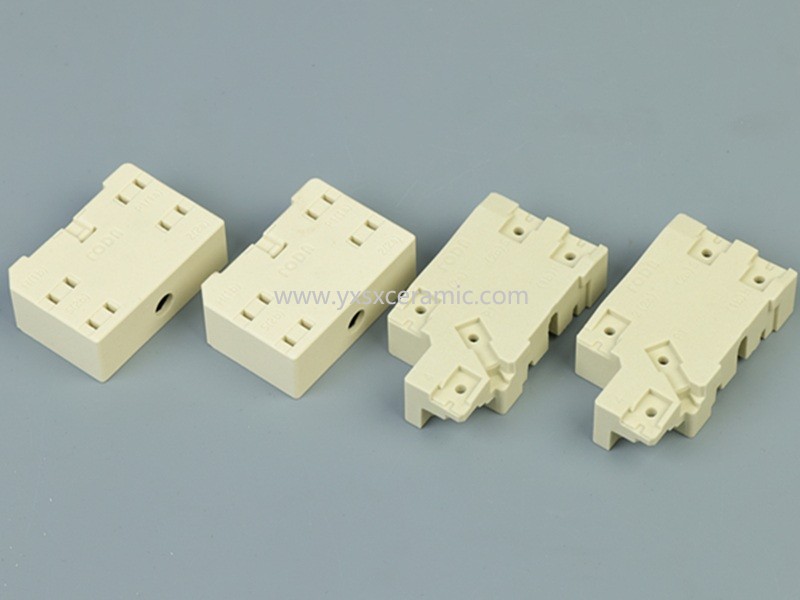
• Electronics & Power Industry: Ceramic insulating substrates, terminal insulators, vacuum‑device insulating parts. Low dielectric loss guarantees stable electrical performance under high‑voltage and high‑frequency conditions.
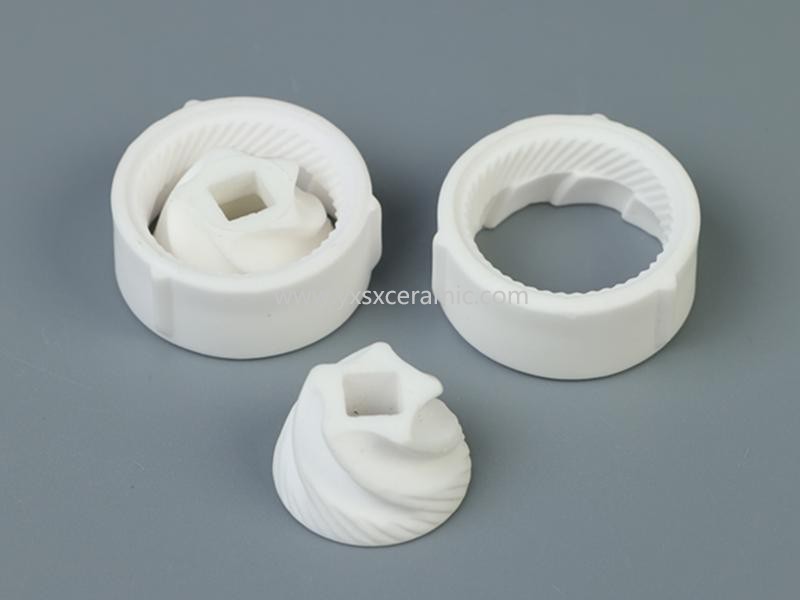
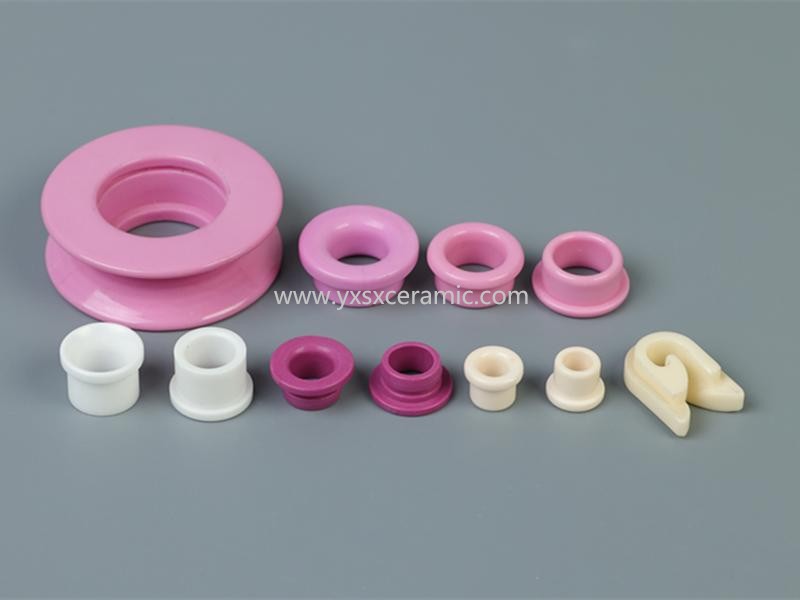
• Mechanical & Wear‑resistant Components: Seal rings, guide sleeves, ceramic thrust washers, anti‑abrasive liners for material conveying equipment.
• New‑Energy & Semiconductor: Insulating structural parts resistant to impurity pollution, suitable for battery equipment and semiconductor processing fixtures.
• Chemical Industry: Corrosion‑resistant sleeves, protective tubes working under acid‑alkali medium environment.
Industry Trends & Outlook
Global demand for alumina advanced ceramics keeps growing, driven by new‑energy vehicles, semiconductor and industrial‑upgrade trends. Three obvious development directions stand out:
1. High‑precision customization: Downstream customers require complex‑geometry ceramic parts with tighter tolerance, pushing improvement in dry‑press, green‑body machining and post‑grinding capacity.
2. Composite material optimization: ZTA (zirconia‑toughened alumina) composite material improves fracture‑toughness to overcome alumina brittleness limits for heavy‑load scenarios.
3. Advanced manufacturing innovation: Additive manufacturing (ceramic 3D printing) gradually applies for small‑batch complex prototype parts, though cost and density consistency remain challenges for mass‑production at present.

24/7 Call Service +8618018373518
Email : yxshenxing88@vip.163.com
Address : No. 2022, Baoyang Road, Chuanbu Industrial Zone, Yixing City, Wuxi City, Jiangsu Province


 2025-10-14
 2025-10-14
blog Xml Privacy Policy Sitemap
Copyright @ 2026 Yixing Shenxing Technology Co., Ltd. All Rights Reserved.
 Network Supported
leave a message
Scan to wechat :

Scan to whatsapp :