Top 7 Industrial Applications of Steatite Ceramic Components in Electrical and Automotive Industries
Aug 13, 2026
Steatite ceramic is a magnesium silicate-based technical ceramic that has been used for decades in electrical insulation and industrial components. Its combination of electrical insulation, mechanical strength, dimensional stability, relatively low dielectric loss, and good high-temperature performance makes it useful in applications where conventional polymers may soften, deform, or lose insulating performance.
For engineers and industrial buyers, the value of steatite is not simply that it is an electrical insulator. The material can also provide structural support, maintain precise dimensions under heat, and withstand long-term exposure to electrical and mechanical stress. Depending on the grade and manufacturing process, steatite can be formed into beads, bushings, spacers, terminal boards, bases, holders, sleeves, and other precision parts.
This article examines seven practical applications and explains how to determine whether steatite is appropriate for a particular electrical or automotive component.
Why Steatite Ceramic Is Used in Industrial Components
Steatite is based primarily on talc-derived magnesium silicate. After forming and sintering, it provides a combination of properties that is difficult to obtain from a single polymer or metal material.
Typical commercial data show that steatite can have flexural strength around 140–160 MPa, thermal conductivity around 2.5–3.0 W/m·K, a coefficient of thermal expansion of approximately 8.5–10 × 10⁻⁶/°C, and a maximum use temperature around 1200°C, depending on the grade and application conditions. Some low-loss grades also provide volume resistivity above 10¹⁴ Ω·cm at room temperature. These values should be treated as grade-specific rather than universal specifications.
Property
Typical Steatite Range / Characteristic
Engineering Benefit
Flexural strength
140–160 MPa
Handles mechanical loading
Thermal conductivity
2.5–3.0 W/m·K
Helps maintain electrical isolation
Thermal expansion
8.5–10 × 10⁻⁶/°C
Good dimensional stability
Maximum use temperature
Up to about 1200°C*
Suitable for high-temperature assemblies
Volume resistivity
>10¹³–10¹⁴ Ω·cm*
Strong electrical insulation
Dielectric loss
Low for suitable grades
Useful in high-frequency applications
Formability
Complex shapes possible
Supports customized component designs
*Actual performance depends on ceramic formulation, geometry, atmosphere, frequency, temperature, and test method.
For industrial procurement, this means the material should be selected according to the complete operating environment rather than by maximum temperature or insulation value alone.
1. Electrical Insulators, Bushings and Feed-Throughs
One of the most established uses of steatite is electrical insulation.
Bushings and feed-through components separate conductive elements from housings, frames, mounting structures, or adjacent conductors. They are especially useful where electrical insulation must remain stable while the component is exposed to elevated temperatures.
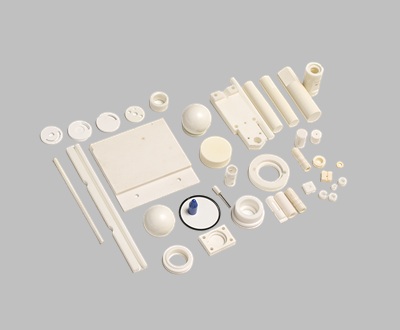
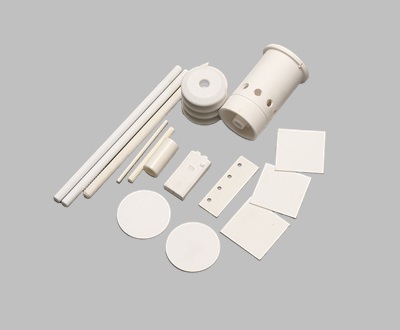
Steatite products are commonly manufactured as bushings, insulating beads, sleeves, terminal components, and other insulating structures.
For example, a ceramic bushing may need to perform three functions simultaneously:
Maintain electrical separation.
Support the conductor mechanically.
Maintain its geometry during heating and cooling.
This makes ceramic particularly attractive in heating equipment, switchgear, control equipment, and industrial electrical assemblies.
When purchasing Steatite Ceramic Insulators, engineers should check the required voltage, creepage distance, operating temperature, mechanical load, mounting method, and environmental conditions rather than specifying the material alone.
2. Fuse Bodies and Fuse Bases
Fuse protection systems require insulating components capable of containing electrical energy while maintaining mechanical integrity.
Steatite is used for fuse bodies, fuse casings, fuse bases, and related components because it combines electrical insulation with mechanical resistance. Commercial steatite product ranges specifically include fuse casings designed for electrical protection applications.
A fuse body must also maintain dimensional accuracy. Poor dimensional stability can affect terminal positioning, contact pressure, assembly tolerances, and ultimately the reliability of the protection device.
For manufacturers producing multiple fuse sizes, custom ceramic forming can be particularly useful because the component geometry can be adapted to the electrical design and assembly requirements.
3. Heating Elements and High-Temperature Electrical Equipment
Steatite is also widely used around heating elements.
Electrical heating systems create a difficult combination of temperature and electrical stress. Metal heating wires need mechanical support and electrical separation, while surrounding components must tolerate repeated heating and cooling cycles.
Steatite ceramic holders, beads, bases, and wire supports can keep resistance wires properly positioned while preventing unwanted electrical contact with metal structures.
Typical applications include:
Industrial heaters
Electric ovens
Heating cabinets
Resistance heating equipment
Heat-treatment equipment
Household and commercial heating appliances
Steatite manufacturers list ceramic holders, resistance-wire holders, bases, and insulating beads among their established product types.
For continuous-duty heating systems, procurement teams should evaluate thermal cycling rather than relying only on the stated maximum operating temperature. A component that survives a single high-temperature exposure may behave differently under thousands of heating and cooling cycles.
4. Terminal Boards and Electrical Connection Systems
Terminal boards provide a mechanical platform for connecting and organizing electrical conductors. In high-temperature environments, conventional polymer terminal blocks may become unsuitable because their mechanical and insulating properties can deteriorate as temperature increases.
Steatite terminal boards offer electrical insulation combined with mechanical rigidity and dimensional stability. They are used in heating appliances, electrical cabinets, and other electrical assemblies.
For industrial equipment manufacturers, the geometry of the terminal board is often just as important as the ceramic material itself.
Important design variables include:
Design Parameter
Why It Matters
Hole diameter
Controls terminal or fastener fit
Hole spacing
Determines electrical clearance
Ceramic thickness
Influences mechanical strength
Surface geometry
Affects creepage and contamination resistance
Mounting dimensions
Determines assembly compatibility
Tolerance
Controls repeatability during production
This is one area where Custom Steatite Ceramic Parts can provide a practical advantage over standard components.
5. Automotive Ignition and High-Temperature Components
Automotive systems expose insulating materials to vibration, heat, electrical stress, oil, fuel vapors, and rapid temperature changes.
Ceramic materials have a long history in automotive electrical insulation. Spark plugs are a familiar example of ceramic electrical insulation, although modern spark-plug insulators are generally based on high-purity alumina rather than conventional steatite. The insulator separates the high-voltage conductor and electrode from the metal housing.
Steatite can nevertheless be considered for selected automotive and ignition-related supporting components where its electrical, mechanical, and thermal characteristics meet the application requirements.
Potential applications include:
Insulating spacers
Terminal supports
Ignition-system supporting parts
Sensor-related insulating structures
High-temperature electrical holders
Ceramic sleeves and bushings
The important point is material matching. A component exposed directly to the combustion chamber or extremely aggressive thermal cycling may require alumina, zirconia, cordierite, or another specialized ceramic instead.
6. Automotive Electrical and Electronic Assemblies
Modern vehicles contain an increasing number of electrical and electronic systems. High-temperature zones around engines, exhaust systems, actuators, sensors, and power electronics can create difficult material-selection problems.
Steatite is attractive where the component primarily needs electrical isolation, moderate mechanical strength, dimensional stability, and resistance to heat. Technical ceramic suppliers also identify automotive applications as an established field for steatite and related ceramic materials.
For automotive applications, engineers should consider the entire thermal profile rather than the maximum temperature alone.
A useful evaluation sequence is:Operating temperature → Thermal cycling → Electrical voltage → Mechanical vibration → Chemical exposure → Dimensional tolerance → Manufacturing process
If the component experiences vibration, for example, simply choosing a ceramic with sufficient compressive strength is not enough. Sharp corners, holes, thin sections, and stress concentrations can significantly influence reliability.
7. High-Frequency, Measurement and Control Equipment
Steatite is also used in measurement, control, and high-frequency electrical applications because suitable grades combine electrical insulation with low dielectric losses and dimensional stability.
Steatite has traditionally been used for insulating components such as spacers, rings, beads, sleeves, sockets, and other precision electrical parts.
This can be useful in:
High-frequency equipment
Electrical control systems
Measurement instruments
RF-related insulating structures
Switch components
Precision electrical assemblies
However, dielectric performance is frequency- and temperature-dependent. A ceramic specification that looks adequate at room temperature and low frequency should not automatically be assumed to perform identically at higher frequencies.
For RF or precision applications, ask the ceramic manufacturer for dielectric constant, dissipation factor, volume resistivity, and test conditions at the actual operating frequency and temperature.
How to Choose the Right Steatite Component
Material selection should start with the operating conditions rather than the component name.
Requirement
Questions to Ask the Supplier
Electrical insulation
What voltage and insulation resistance are required?
Temperature
What is the continuous and peak temperature?
Thermal cycling
How many heating/cooling cycles are expected?
Mechanical loading
Is the part under compression, bending, vibration, or impact?
Tolerance
Which dimensions require tight control?
Environment
Will the part contact oil, moisture, chemicals, or contaminants?
Frequency
Is dielectric performance required at high frequency?
Production volume
Is pressing, extrusion, machining, or another process appropriate?
Assembly
Will the ceramic be press-fitted, screwed, bonded, or mechanically clamped?
This approach helps avoid a common purchasing mistake: selecting a ceramic only because its maximum temperature rating appears higher than the application temperature.
Standard vs. Custom Steatite Ceramic Parts
Standard ceramic components are appropriate when the dimensions and electrical requirements match an existing design. They can reduce tooling costs and shorten procurement time.
Custom parts become more useful when the component must fit a proprietary assembly.
A custom design may include:
Non-standard hole patterns
Multiple stepped diameters
Grooves and locating features
Thin-wall sections
Special mounting geometry
Tight dimensional tolerances
Integrated slots or channels
For OEMs and industrial equipment manufacturers, custom forming can also reduce the number of secondary assembly operations.
However, ceramic design should account for the manufacturing process from the beginning. Sharp internal corners, unnecessarily thin sections, and poorly controlled tolerances can increase manufacturing difficulty and rejection rates.
A Practical Comparison of the Seven Applications
Application
Main Function
Key Requirement
Typical Buyer
Bushings & feed-throughs
Electrical isolation
Insulation + dimensional stability
Electrical OEM
Fuse bodies
Protection
Insulation + mechanical strength
Fuse manufacturer
Heating supports
Wire positioning
Heat resistance + insulation
Heater manufacturer
Terminal boards
Connection support
Insulation + precision
Electrical equipment OEM
Automotive components
Electrical isolation
Heat + vibration resistance
Automotive supplier
Electronic assemblies
Component insulation
Thermal + electrical stability
Electronics OEM
High-frequency equipment
Insulation/support
Low dielectric loss
Instrument/RF manufacturer
What Should Be Included in a Steatite Ceramic RFQ?
A technically useful RFQ should contain more than a drawing and the material name.
At minimum, provide:
Part drawing: Include dimensions, tolerances, holes, threads, grooves, and critical surfaces.
Electrical requirements: Specify working voltage, insulation resistance, dielectric strength, frequency, and required test method where applicable.
Thermal requirements: State continuous temperature, peak temperature, heating rate, cooling rate, and expected number of thermal cycles.
Mechanical requirements: Identify compression, bending, vibration, impact, or assembly loads.
Surface requirements: Specify glazing, roughness, metallization, or other surface requirements if necessary.
Quantity: Annual volume and batch size can influence the most economical forming and tooling method.
Inspection requirements: Define dimensional inspection, electrical testing, visual inspection, and sampling requirements before production.
This information allows the supplier to determine whether standard Steatite Ceramic Components are sufficient or whether a customized formulation and geometry are more appropriate.
When Steatite Is the Right Choice
Steatite is particularly attractive when an industrial component needs a combination of electrical insulation, mechanical rigidity, dimensional stability, and resistance to elevated temperatures without moving to a more expensive advanced ceramic unnecessarily.
It is not automatically the best ceramic for every application. Alumina may be preferable when higher electrical performance or mechanical strength is required; cordierite can be advantageous for certain thermal-shock applications; and other advanced ceramics may be selected for extreme wear, thermal conductivity, or high-voltage environments.
The strongest material-selection process therefore starts with the operating conditions, component geometry, production volume, and required service life. Once these factors are defined, manufacturers can determine whether standard steatite components or custom steatite ceramic parts provide the better technical and commercial solution.
For electrical and automotive OEMs, the goal is not simply to find a ceramic part that fits the drawing. The better approach is to specify the electrical, thermal, mechanical, and manufacturing requirements together so the finished ceramic component remains reliable throughout its expected service life.






 2025-10-14
 Network Supported