What are alumina ceramic beads and their main industrial uses?
Jul 09, 2026
You encounter alumina ceramic beads in industries that demand materials with superior strength. These precision-engineered spheres deliver exceptional hardness and outstanding wear resistance. You often find them at work in mining and milling operations, where they excel as grinding media. Their robust performance makes them the preferred choice for environments that require consistent durability and chemical stability.
Key Takeaways
Alumina ceramic beads are very strong and resist wear, making them ideal for tough industrial tasks.
These beads are made mostly of high-purity aluminum oxide, which gives them their strength and stability.
They are used in mining and milling to grind materials efficiently and reduce costs.
Alumina ceramic beads are also used in filtration and blasting because they are stable and don't contaminate materials.
Compared to glass and steel media, alumina ceramic beads last longer and cause less contamination.
Alumina Ceramic Beads Overview
Composition
You find that alumina ceramic beads consist mainly of high-purity aluminum oxide. Manufacturers often select this material for its outstanding mechanical and chemical properties. The purity level of the alumina ceramic directly affects its performance in industrial applications. When you choose beads with higher alumina content, you gain improved hardness and resistance to wear. Some producers, such as Yixing Shenxing alumina ceramic beads, focus on strict quality control to ensure consistent composition and reliability.
Structure
Alumina ceramic beads display a dense, fine-grained microstructure. This structure results from advanced sintering processes that eliminate pores and defects. You benefit from this uniformity because it provides high strength and reduces the risk of premature failure. The spherical shape of each bead ensures even distribution of force during milling or grinding. This design helps you achieve efficient energy transfer and minimizes contamination in sensitive processes.
Key Characteristics
You can distinguish alumina ceramic beads from other materials by their unique set of physical properties. The table below highlights the most important characteristics:
Characteristic
Description
Strength
Alumina ceramics exhibit high strength, making them suitable for demanding applications.
Wear Resistance
They possess excellent wear resistance, which is crucial for longevity in various uses.
Biocompatibility
Their biocompatibility allows for safe use in medical implants and devices.
When you use alumina ceramic beads, you notice several performance advantages:
High density leads to better grinding efficiency.
Low wear loss extends service life.
Contamination-free grinding supports high-purity material processing.
However, you should remain aware of potential failure modes:
Molten metal penetration and wedge cracking can occur through microcracks.
Chemical attack from alloying elements may degrade the bead surface.
Thermal shock and erosion can cause cracks or surface wear during rapid temperature changes.
By understanding these features, you can select alumina ceramic beads that deliver reliable performance in your most demanding operations.
Alumina Ceramic Beads: Properties
Hardness
You rely on alumina ceramic beads for their impressive hardness. These beads stand out in industrial applications because they resist deformation and scratching. Studies show that the hardness of alumina ceramic beads reaches approximately 15 on the Mohs scale, which places them among the hardest materials used for grinding and milling. This high hardness allows you to process tough ores and materials without worrying about bead breakdown. You gain consistent performance and minimize downtime in your operations.
The hardness of alumina ceramic beads is approximately 15 on the Mohs scale.
You benefit from superior resistance to abrasion and impact.
Wear Resistance
You notice that alumina ceramic beads deliver exceptional wear resistance. This property ensures that the beads last longer than many other grinding media. Laboratory tests compare different grades of alumina ceramic beads and highlight their durability. You can review the table below to see how wear loss and typical life vary by alumina grade:
Alumina Grade
Wear Loss (g/kg·h)
Typical Life (relative)
68% Alumina
0.08 – 0.15
1x
75% Alumina
0.04 – 0.08
1.5–2x
92% Alumina
0.01 – 0.03
4–5x
95% Alumina
0.005 – 0.015
6–7x
Zirconia
< 0.005
10–15x
You achieve longer service life and reduced maintenance costs when you select higher purity beads. Many industries, including mining and milling, prefer alumina ceramic beads for their consistent performance and reliability. Yixing Shenxing offers beads with strict quality control, which helps you maintain efficiency in demanding environments.
Chemical Stability
You depend on alumina ceramic beads for their outstanding chemical stability. These beads remain inert in many environments, preventing contamination during high-purity processes. You can use them in medical and food processing applications with confidence. High-purity alumina ceramic beads resist acidic conditions, including hydrochloric, nitric, and sulfuric acids. You also find them stable in oxidizing atmospheres, such as muffle furnaces. However, you should avoid using them in strong bases at high temperatures, which can cause degradation.
Alumina ceramic beads withstand temperatures exceeding 2000°C in controlled conditions.
They protect sensitive equipment in hydrogen energy systems from sudden temperature spikes.
You find them immune to chemical attack from hydrogen gas or steam.
They perform well in high-temperature reactors, offering protection against thermal stress.
You gain peace of mind knowing that alumina ceramic beads deliver reliable performance in harsh chemical and thermal environments.
Industrial Uses
Alumina ceramic beads play a crucial role across a wide range of industries that demand high performance and reliability. You encounter these beads in sectors where strength, durability, and chemical stability are essential for daily operations. The main industrial sectors that utilize alumina ceramic beads include:
Advanced manufacturing
Clean energy
Electronics
Let’s explore how you can leverage alumina ceramic beads in several key applications.
Mining and Milling
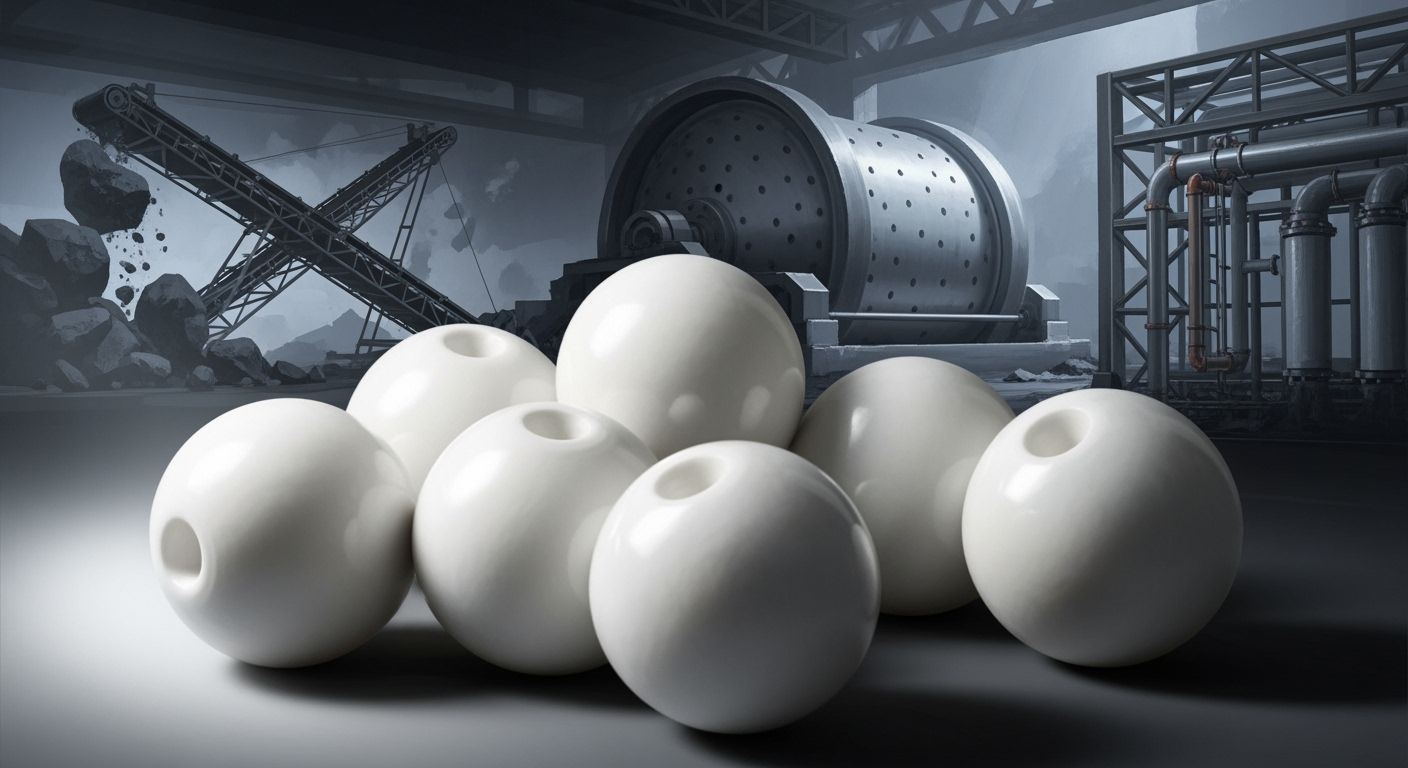
You will find alumina ceramic beads most commonly in the mining industry, especially as grinding media in ball mills. When you process ores and minerals, you need materials that can withstand constant impact and abrasion. Alumina ceramic beads deliver consistent particle size reduction and maintain their shape even after extended use. Their high density and hardness allow you to achieve efficient grinding, which improves throughput and reduces operational costs.
If you operate a milling facility, you know that downtime and contamination can disrupt production. Alumina ceramic beads minimize these risks. Their low wear rate means you replace them less frequently, and their chemical inertness ensures that your final product remains pure. Many mining companies choose ceramic grinding media for these reasons. You can learn more about this product in our ceramic grinding media guide.
Yixing Shenxing stands out as a trusted supplier in this field. The company’s strict quality control and advanced manufacturing processes ensure that you receive alumina ceramic beads with uniform size and exceptional durability.
Filtration
You can also use alumina ceramic beads in filtration systems. Their uniform spherical shape and chemical stability make them ideal for supporting filter beds in water treatment and chemical processing plants. When you need to remove impurities or separate particles, these beads provide a stable and inert medium. Their resistance to acids and high temperatures allows you to use them in harsh environments without worrying about degradation.
Many engineers select ceramic filtration beads for critical filtration applications. For more details, visit our ceramic filtration beads resource.
Blasting
In surface preparation and cleaning, you often rely on blasting media that can deliver consistent results without damaging the underlying material. Alumina ceramic beads offer a unique combination of hardness and toughness, making them suitable for abrasive blasting. You can use them to clean metal surfaces, remove coatings, or prepare parts for further processing. Their spherical shape ensures even impact distribution, which reduces the risk of surface pitting.
If you are looking for a reliable blasting solution, consider ceramic blasting beads. You can find more information in our ceramic blasting beads overview.
Catalyst Support
Alumina ceramic beads serve as essential catalyst supports in chemical processing industries. You benefit from their high surface area, chemical inertness, and mechanical strength. These properties help stabilize catalyst layers, prevent particle migration, and improve reaction efficiency in reactors and separation units.
The table below summarizes the roles of alumina ceramic beads in various catalyst support applications:
Application Area
Role of Alumina Ceramic Beads
Hydrogenation Reactors
Stabilize catalyst layers
Desulfurization Units
Prevent particle migration
Reforming Towers
Improve overall reaction efficiency
Gas-Liquid Separation Beds
Serve as inert support media
You can see that alumina ceramic beads provide reliable performance in demanding chemical environments. Many process engineers choose ceramic catalyst support beads for these applications. For a deeper understanding, refer to our ceramic catalyst support beads article.
Tip: When you select alumina ceramic beads for your industrial processes, always consider the purity and structural integrity of the beads. High-quality products, such as those from Yixing Shenxing, ensure optimal performance and long service life.
Alumina Ceramic: Material Comparison
Glass Beads
You often compare alumina ceramic beads with glass beads when selecting grinding or blasting media. Glass beads offer several advantages in surface finishing and cleaning. You achieve a decorative satin finish and maintain dimensional accuracy because glass beads clean and polish surfaces without causing wear or altering tolerances. Shot peening with glass beads improves fatigue resistance and mechanical strength. You also remove fine burrs and flash without damaging sharp edges, preserving workpiece integrity.
However, alumina ceramic beads deliver higher performance in demanding environments. You benefit from their superior hardness and wear resistance, which allow for quicker metal surface cutting and reduced processing time. Ceramic beads provide excellent surface quality and avoid embedding into workpieces, preventing rust pollution. You also notice their strong adaptability to various materials and high-temperature processes. Although the unit price is higher, you gain long-term cost savings due to durability and efficiency. Ceramic beads generate less noise and contain no harmful substances, supporting environmental protection.
Tip: For high-efficiency grinding and minimal contamination, consider using ceramic grinding media in your operations.
Steel Media
Steel media remains a popular choice for many industrial applications. You select steel balls for their low initial cost and availability. Carbon steel balls suit short-run jobs, while stainless steel offers better corrosion resistance. However, you face challenges with steel media in abrasive slurries. Wear rates are high, leading to frequent replacements and increased maintenance. Metallic contamination poses risks in high-purity processes.
Alumina ceramic beads outperform steel media in durability and lifecycle cost. You experience wear rates up to six times lower, which extends service life and reduces downtime. Ceramic beads resist chemical attacks, preventing cross-contamination. Although the initial investment is higher, you achieve reduced overall lifecycle costs and less frequent replacements. Industries often switch to ceramic media for high wear resistance and chemical stability, especially when purity is critical.
Material Type
Typical Unit Cost
Wear Life
Contamination Risk
Best Use Case
Carbon steel balls
Low
Short
High
Cheap short-run jobs
Stainless steel
Medium
Longer
Medium
Corrosive but not highly abrasive
Alumina ceramic balls
Medium-high
Long
Low
High wear resistance and stability
Zirconia balls
High
Very long
Very low
Highest-performance need
You may encounter challenges when switching to ceramic media. High initial costs deter smaller enterprises, and volatility in raw material prices affects availability. Despite these barriers, brands like Yixing Shenxing help you access reliable ceramic catalyst support beads for demanding applications.
You rely on alumina ceramic beads for their outstanding hardness, wear resistance, and chemical stability. In mining and milling, these beads enhance efficiency and reduce operational costs. You benefit from durability, minimal contamination, and compatibility with various materials.
High resistance to chemical corrosion
Reliable electrical insulation
Exceptional performance in high-temperature environments
Superior abrasion resistance
Property
Description
High Melting Point
Withstands temperatures over 2000°C for demanding applications.
High Hardness
Mohs hardness of 9 ensures resistance to abrasion.
Chemical Inertness
Prevents contamination in high-purity processes.
You can trust ceramic grinding media from Yixing Shenxing for high-performance industrial needs.
FAQ
What industries use alumina ceramic beads most often?
You find alumina ceramic beads in mining, milling, chemical processing, and water treatment. These industries value the beads for their hardness, wear resistance, and chemical stability. You also see them in advanced manufacturing and electronics for specialized applications.
How do alumina ceramic beads compare to glass or steel media?
You achieve longer service life and less contamination with alumina ceramic beads. Glass beads work well for gentle cleaning, while steel media suits short-term jobs. You choose alumina ceramic beads for high wear resistance and chemical inertness in demanding environments.
Can you reuse alumina ceramic beads after processing?
You can reuse alumina ceramic beads if they remain intact and uncontaminated. Inspect the beads for cracks or surface wear before each cycle. Replace damaged beads to maintain process efficiency and product purity.
Are alumina ceramic beads safe for food or medical applications?
You can safely use high-purity alumina ceramic beads in food and medical industries. Their chemical inertness and biocompatibility prevent contamination. Always verify the purity and certification of the beads for these sensitive uses.
What is the difference between alumina ceramic beads and alumina ceramic substrate?
You use alumina ceramic beads as grinding or support media. Alumina ceramic substrate serves as a base for electronic circuits or thin-film devices. Both materials offer high hardness and chemical stability, but their shapes and functions differ.







 2025-10-14
 Network Supported