What Is a Ceramic Socket Cup and Where Is It Used?
Nov 04, 2026
A ceramic socket cup is a shaped technical ceramic component designed to hold, support, or insulate electrical parts within a socket or connection assembly. Depending on its design, it may have a cup-shaped cavity, positioning holes, mounting features, or openings for electrical contacts and wires. Its main purpose is to provide reliable electrical insulation while maintaining mechanical stability in demanding operating environments.
Ceramic socket components are commonly considered for lighting equipment, heating systems, thermocouples, temperature sensors, and industrial electrical assemblies. Unlike many conventional plastic holders, technical ceramics can maintain their insulating and structural properties in applications involving elevated temperatures or electrical stress, provided the selected material grade and component design are suitable for the working conditions.
For manufacturers and industrial buyers, the material, shape, dimensions, and internal structure all affect how a ceramic socket component performs. Yixing Shenxing Technology Co., Ltd. manufactures precision ceramic components, including steatite thermocouple ceramic sockets and alumina ceramic lamp sockets. This guide explains what a ceramic socket cup is, where it is used, and what to consider when selecting a custom ceramic component.
What Is a Ceramic Socket Cup?
A ceramic socket cup is generally understood as a cup-shaped or socket-shaped ceramic holder used to position and electrically isolate components in an electrical or thermal assembly. It may serve as a supporting base, protective housing, insulating seat, or mounting part, depending on the equipment in which it is installed.
The term "socket cup" is not used identically across every industry. In lighting hardware, it can refer to an outer metal cup or housing around a lamp socket. In technical ceramics, buyers may use the term to describe a ceramic insulating cup, socket body, holder, or base. These components are not necessarily interchangeable. When sourcing a ceramic part, a drawing or sample is more reliable than the product name alone.
A ceramic socket component typically performs several functions:
Electrical insulation: Separates conductive parts and helps prevent unintended electrical contact.
Component positioning: Holds contacts, wires, or sensor elements in their intended positions.
Thermal resistance: Helps maintain the component's structure and insulation properties in elevated-temperature environments, according to the selected ceramic grade.
Mechanical protection: Provides a rigid support that can protect delicate electrical parts from movement, abrasion, and handling damage.
The ceramic body itself does not automatically define the electrical rating of the complete socket assembly. Voltage, current, creepage distance, clearance, electrode design, and applicable product standards must all be evaluated for the finished equipment.
What Materials Are Used for Ceramic Socket Cups?
The choice of ceramic material depends on the socket's operating temperature, electrical requirements, mechanical loading, chemical exposure, and production cost. Alumina and steatite are two relevant technical ceramic materials for insulating components.
Alumina ceramic (Al₂O₃)
Alumina ceramic is widely used in electrical and industrial components because of its electrical insulation, hardness, wear resistance, and thermal stability. Different alumina grades are available, including 95% and 99% alumina. A 95% alumina component can provide a practical balance of performance and manufacturing cost for many general industrial applications, while higher-purity grades may be considered when an application requires more demanding material properties.
Yixing Shenxing supplies 95% alumina ceramic components for industrial applications. The specific grade should be selected according to the required insulation, temperature, strength, and dimensional requirements rather than purity percentage alone.
Steatite ceramic
Steatite is a magnesium silicate-based technical ceramic commonly used for electrical insulating components. It offers useful electrical insulation, dimensional stability, and mechanical performance for a range of electrical and heating applications. It is often considered for terminal components, insulating supports, thermocouple parts, and other components where a balance of performance and cost is important.
For applications involving thermocouples or heating equipment, buyers can review the available steatite ceramic components and confirm the required grade, shape, and operating conditions with the manufacturer.
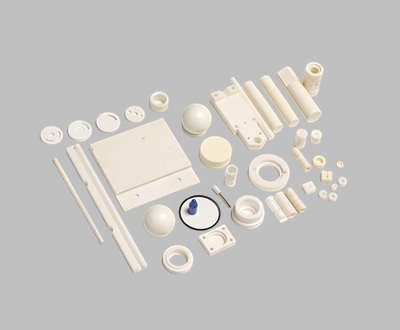
Cup-shaped ceramic components and insulating parts
Where Are Ceramic Socket Cups Used?
Ceramic socket cups and related insulating holders are used in equipment where electrical separation, heat resistance, or stable component positioning is required. Their applications vary according to the material, geometry, and assembly design.
Lighting equipment and lamp holders
Ceramic lamp sockets are used in lighting assemblies where the holder must support electrical contacts and withstand the heat generated during lamp operation. Ceramic insulating bodies can be considered for high-temperature lighting applications, industrial lamps, and other lighting equipment where a suitable ceramic grade and socket design are required.
Yixing Shenxing offers a 95% alumina ceramic lamp socket designed for lighting applications requiring ceramic insulation and temperature resistance. Dimensions, mounting details, and the electrical requirements of the complete lamp assembly should be confirmed before production.
Thermocouples and temperature measurement equipment
Thermocouples use two dissimilar metal conductors to measure temperature. Ceramic insulating components help keep the conductors separated, maintain their positions, and protect delicate wires from mechanical damage. In high-temperature measurement assemblies, a suitable ceramic socket or insulator can help maintain reliable operation under thermal and electrical stress.
This is one of the direct applications of the steatite thermocouple ceramic socket supplied by Yixing Shenxing. Its stated functions include electrical insulation, mechanical protection, high-temperature integrity, and positioning of thermocouple elements.
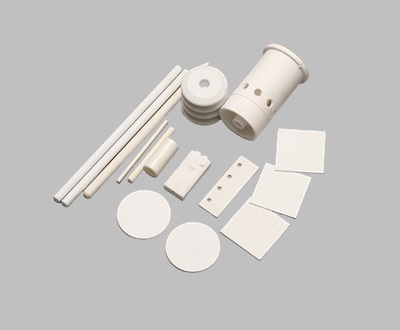
Technical ceramic insulating components for electrical assemblies
Heating elements and industrial heating equipment
Heating systems often contain electrical connections and components exposed to repeated temperature changes. Ceramic holders, sleeves, and socket-shaped insulators can support electrical connections while providing separation between conductive parts. Their suitability depends on operating temperature, heating cycle, electrical load, and the thermal expansion characteristics of the assembled materials.
Electrical connectors and terminal assemblies
Ceramic insulating bases and housings can also be used in terminal blocks, electrical connectors, and specialized connection assemblies. They help maintain separation between conductive terminals and provide a rigid support for the internal contact structure. The final design must take into account the required terminal spacing, mounting method, and electrical rating.
Industrial sensors and high-temperature instruments
In industrial sensing equipment, ceramic parts may serve as insulating supports or protective components around sensitive electrical elements. Their dimensional stability and resistance to heat can be useful in temperature measurement, process monitoring, and specialized instrumentation.
Ceramic Socket Cup vs. Plastic and Metal Holders
Ceramic, plastic, and metal holders serve different purposes. No material is automatically suitable for every socket application. The right choice depends on whether the component is mainly required to provide insulation, structural support, heat resistance, or electrical contact.
Material
Typical Characteristics
Common Considerations
Technical ceramic
Electrical insulation, heat resistance, hardness, and dimensional stability
Suitable for demanding electrical and thermal environments; brittle behavior and machining tolerances must be considered
Plastic
Lightweight, moldable, and available in many designs
Temperature limits, flame properties, aging, and material grade require evaluation
Metal
Mechanical strength, impact resistance, and electrical conductivity
May require separate insulating parts, coatings, or clearances to prevent unintended electrical contact
A ceramic socket cup is often worth considering when a component needs to combine electrical insulation with resistance to heat. However, ceramic is typically more brittle than metal or many plastics. Sharp corners, uneven loading, impact during installation, and excessive clamping force should therefore be addressed during the design stage.
How to Choose the Right Ceramic Socket Cup
For OEM manufacturers, equipment designers, and industrial component buyers, selecting a ceramic socket cup starts with the working conditions and the physical design of the assembly. The following points can help define a suitable specification.
Identify the application and operating environment.
Confirm whether the component will be used in a lamp holder, thermocouple, heating element, electrical connector, or industrial sensor. Record the normal operating temperature, peak temperature, electrical conditions, and exposure to chemicals or moisture.
Select the ceramic material and grade.
Compare alumina and steatite according to insulation requirements, temperature range, mechanical strength, thermal behavior, and cost. The material should be selected based on verified grade-specific data rather than a general statement that all ceramic materials have the same performance.
Confirm dimensions and structural details.
Provide the outer diameter, inner diameter, height, wall thickness, cavity depth, hole positions, slots, threads, and mounting features. For parts that fit into an existing assembly, dimensional tolerances and mating-part measurements are especially important.
Check electrical and thermal requirements.
Specify the required withstand voltage, working temperature, insulation resistance, and any relevant testing conditions. These requirements should be checked against the actual ceramic grade and finished component design.
Evaluate manufacturing tolerances and surface finish.
Ceramic parts are formed and sintered before precision machining where required. Hole position, flatness, concentricity, surface finish, and dimensional consistency can affect assembly fit and long-term performance. Identify critical dimensions clearly on the drawing.
Request samples or confirm a drawing before mass production.
For a custom ceramic socket cup, a technical drawing or physical sample helps the manufacturer review the structure and production feasibility. Sample evaluation can also help confirm fit, assembly performance, and whether any design adjustments are needed.
Custom Ceramic Socket Cup Manufacturing at Yixing Shenxing
Yixing Shenxing Technology Co., Ltd. is a technical ceramics manufacturer based in Yixing, Wuxi, Jiangsu, China. The company focuses on the research, development, production, and sales of precision ceramic components, including alumina, zirconia, steatite, and other special ceramic products.
Its product range includes ceramic insulating parts for electrical, electronic, heating, and industrial applications. The company also states that it supports OEM and ODM projects, with technical support and quality inspection as part of its manufacturing services.
When requesting a quotation for a ceramic socket cup or a related insulating component, buyers can prepare the following information:
Information
Details to Provide
Product drawing
2D drawing, 3D model, or physical reference sample
Ceramic material
Alumina, steatite, or another specified ceramic material and grade
Dimensions
Outer and inner diameters, height, wall thickness, holes, and tolerances
Working conditions
Operating temperature, voltage, insulation requirements, and environmental exposure
Order details
Prototype quantity, expected batch quantity, and delivery requirements
Providing these details allows the manufacturer to evaluate the material, forming process, machining requirements, and production feasibility more accurately. For components that must fit existing electrical or heating assemblies, it is particularly important to confirm the drawing and critical tolerances before mass production.
Frequently Asked Questions About Ceramic Socket Cups
What is a ceramic socket cup used for?
A ceramic socket cup is used as an insulating holder, support, or base in electrical and thermal assemblies. Depending on its design, it can help position contacts or wires, separate conductive parts, and provide structural support in applications such as lighting equipment, thermocouples, heating systems, and industrial electrical components.
What is the difference between a ceramic socket cup and a ceramic lamp socket?
A ceramic lamp socket is specifically designed to hold and electrically connect a lamp. A ceramic socket cup is a broader, application-dependent description of a cup-shaped ceramic holder or insulating component. The exact meaning should be confirmed through the product drawing and intended application.
Is alumina or steatite better for a ceramic socket cup?
Neither material is universally better. Alumina is commonly selected for its electrical insulation, hardness, and thermal stability. Steatite is widely used for electrical insulating components where a balance of insulation, mechanical performance, and cost is required. The right material depends on the working temperature, electrical conditions, dimensions, and application.
Can ceramic socket cups withstand high temperatures?
Many technical ceramic materials can operate at elevated temperatures, but the actual temperature limit depends on the ceramic grade, component geometry, thermal cycling, and surrounding assembly. Buyers should request grade-specific technical data rather than assume all ceramic socket components have the same temperature rating.
Are ceramic socket cups suitable for thermocouples?
Yes. Ceramic insulating components are used in thermocouple assemblies to keep conductors separated, protect wires, and maintain component positioning in high-temperature environments. The material and design should match the thermocouple type and operating conditions.
Can a ceramic socket cup be manufactured according to a custom drawing?
Custom ceramic components can be developed according to drawings, dimensions, material requirements, or reference samples. The manufacturer needs to review the geometry, tolerances, material grade, and expected order quantity before confirming production feasibility.
What information is needed to get a quotation for a custom ceramic socket?
Buyers should provide a technical drawing or sample, ceramic material and grade, dimensions, tolerances, operating temperature, electrical requirements, and expected quantity. These details help the manufacturer assess production methods and provide a more accurate quotation.
Are ceramic socket cups better than plastic holders?
Ceramic holders are often considered for applications requiring higher temperature resistance and stable electrical insulation. Plastic holders may be more suitable for applications where impact resistance, flexibility, weight, or lower manufacturing cost is the priority. The selection should be based on the actual operating environment and product requirements.
Find a Suitable Ceramic Socket Solution for Your Application
Ceramic socket cups and related insulating components play an important role in electrical and thermal assemblies. From lamp holders and thermocouples to heating elements and industrial connectors, the right ceramic design helps support electrical insulation, component positioning, and reliable operation under specified working conditions.
The best choice depends on more than the overall shape of the component. Material grade, operating temperature, electrical requirements, mechanical structure, and dimensional tolerances should all be considered during product selection.
Yixing Shenxing Technology Co., Ltd. provides alumina and steatite ceramic components for electrical, heating, and industrial applications. Share your drawing, sample, or technical requirements to discuss a suitable ceramic socket or custom insulating component for your project.
Company: Yixing Shenxing Technology Co., Ltd.
Email: yxshenxing88@vip.163.com
Phone / WhatsApp: +86 180 1837 3518
{
"@context": "https://schema.org",
"@type": "BlogPosting",
"headline": "What Is a Ceramic Socket Cup and Where Is It Used",
"description": "Learn what a ceramic socket cup is, how it works as an electrical insulating component, where it is used, and how to choose alumina or steatite ceramic materials for custom socket applications.",
"author": {
"@type": "Organization",
"name": "Yixing Shenxing Technology Co., Ltd."
},
"publisher": {
"@type": "Organization",
"name": "Yixing Shenxing Technology Co., Ltd.",
"url": "https://www.yxsxceramic.com/"
},
"image": [
"https://www.yxsxceramic.com/storage/uploads/images/202511/18/1763442675_USH9JzGql9.jpg",
"https://www.yxsxceramic.com/storage/uploads/images/202509/16/1758006603_TbHv9XiN7I.jpg"
],
"articleSection": "Technical Ceramic Applications",
"keywords": [
"ceramic socket cup",
"ceramic socket",
"ceramic lamp socket",
"thermocouple ceramic socket",
"alumina ceramic socket",
"steatite ceramic socket",
"ceramic electrical insulator",
"custom technical ceramics"
]
}
{
"@context": "https://schema.org",
"@type": "FAQPage",
"mainEntity": [
{
"@type": "Question",
"name": "What is a ceramic socket cup used for?",
"acceptedAnswer": {
"@type": "Answer",
"text": "A ceramic socket cup is used as an insulating holder, support, or base in electrical and thermal assemblies. Depending on its design, it can help position contacts or wires, separate conductive parts, and provide structural support in applications such as lighting equipment, thermocouples, heating systems, and industrial electrical components."
}
},
{
"@type": "Question",
"name": "What is the difference between a ceramic socket cup and a ceramic lamp socket?",
"acceptedAnswer": {
"@type": "Answer",
"text": "A ceramic lamp socket is specifically designed to hold and electrically connect a lamp. A ceramic socket cup is a broader, application-dependent description of a cup-shaped ceramic holder or insulating component. The exact meaning should be confirmed through the product drawing and intended application."
}
},
{
"@type": "Question",
"name": "Is alumina or steatite better for a ceramic socket cup?",
"acceptedAnswer": {
"@type": "Answer",
"text": "Neither material is universally better. Alumina is commonly selected for its electrical insulation, hardness, and thermal stability. Steatite is widely used for electrical insulating components where a balance of insulation, mechanical performance, and cost is required. The right material depends on the working temperature, electrical conditions, dimensions, and application."
}
},
{
"@type": "Question",
"name": "Can ceramic socket cups withstand high temperatures?",
"acceptedAnswer": {
"@type": "Answer",
"text": "Many technical ceramic materials can operate at elevated temperatures, but the actual temperature limit depends on the ceramic grade, component geometry, thermal cycling, and surrounding assembly. Buyers should request grade-specific technical data rather than assume all ceramic socket components have the same temperature rating."
}
},
{
"@type": "Question",
"name": "Are ceramic socket cups suitable for thermocouples?",
"acceptedAnswer": {
"@type": "Answer",
"text": "Yes. Ceramic insulating components are used in thermocouple assemblies to keep conductors separated, protect wires, and maintain component positioning in high-temperature environments. The material and design should match the thermocouple type and operating conditions."
}
},
{
"@type": "Question",
"name": "Can a ceramic socket cup be manufactured according to a custom drawing?",
"acceptedAnswer": {
"@type": "Answer",
"text": "Custom ceramic components can be developed according to drawings, dimensions, material requirements, or reference samples. The manufacturer needs to review the geometry, tolerances, material grade, and expected order quantity before confirming production feasibility."
}
},
{
"@type": "Question",
"name": "What information is needed to get a quotation for a custom ceramic socket?",
"acceptedAnswer": {
"@type": "Answer",
"text": "Buyers should provide a technical drawing or sample, ceramic material and grade, dimensions, tolerances, operating temperature, electrical requirements, and expected quantity. These details help the manufacturer assess production methods and provide a more accurate quotation."
}
},
{
"@type": "Question",
"name": "Are ceramic socket cups better than plastic holders?",
"acceptedAnswer": {
"@type": "Answer",
"text": "Ceramic holders are often considered for applications requiring higher temperature resistance and stable electrical insulation. Plastic holders may be more suitable for applications where impact resistance, flexibility, weight, or lower manufacturing cost is the priority. The selection should be based on the actual operating environment and product requirements."
}
}
]
}






 2025-10-14
 Network Supported